

This archive tracks major business blunders that occurred on each day in June, from historic corporate collapses to modern fraud cases and executive failures.
June 1
General Motors — Bankruptcy (2009)
General Motors filed for bankruptcy, one of the largest industrial failures in U.S. history, as the automaker collapsed under the weight of declining sales and mounting losses.
June 2
Diebold – Fraud Charges (2010)
Regulators charged Diebold, Inc. and three former executives with a scheme to inflate earnings, a case that led to a $25 million settlement and penalties against the individuals.
BurnLounge – Pyramid Scheme Ruling Upheld (2014)
A federal appeals court upheld a ruling that BurnLounge operated as an illegal pyramid scheme. The company claimed to sell online music stores, but courts concluded the real money came from recruiting participants into the system. BurnLounge claimed about 30,000 people had opened online storefronts.
June 3
FTD — Bankruptcy (2019)
FTD filed bankruptcy under the weight of about $200 million in debt from its 2014 acquisition of ProFlowers, a deal that failed to deliver. In 2023, after emerging from bankruptcy, it merged with From You Flowers.
June 4
Dennis Kozlowski — Criminal Charges (2002)
Former Tyco International CEO Dennis Kozlowski was indicted in New York on charges of evading over $1 million million in sales tax on artwork. Read More: Dennis Kozlowski – Tyco (Business Blunders Hall Of Shame)
Countrywide Financial — Fraud Charges (2009)
Regulators charged Countrywide Financial CEO Angelo Mozilo and other executives with fraud and insider trading. The crisis-era case against Mozilo resulted in a $67.5 million settlement. And his mortgage lender collapsed under the weight of its risky lending practices.
June 5
Binance — Fraud Charges (2023)
Regulators filed a sweeping civil suit against Binance, its U.S. affiliate, and CEO Changpeng Zhao, alleging securities-law violations and misuse of customer assets. Zhao later pleaded guilty to criminal charges and received a four-month prison sentence. President Donald Trump pardoned him in 2025. Read More: Bombing Iran With Crypto (Business Blunders)
June 6
Freddie Mac — Executive Resignation (2003)
Freddie Mac’s board accepted the resignation of its chief financial officer, Vaughn Clarke, amid the company’s accounting scandal.
Uber — Executive Firing (2017)
Uber fired more than 20 employees, including some senior executives, after an internal probe into sexual harassment and bullying. The sweeping move was part of a broader cultural reckoning at the company.
Coinbase — Fraud Charges (2023)
Regulators charged Coinbase with operating as an unregistered exchange, broker, and clearing agency, and also charged it over its staking-as-a-service program registration.
June 7
Webvan — Bankruptcy (2001)
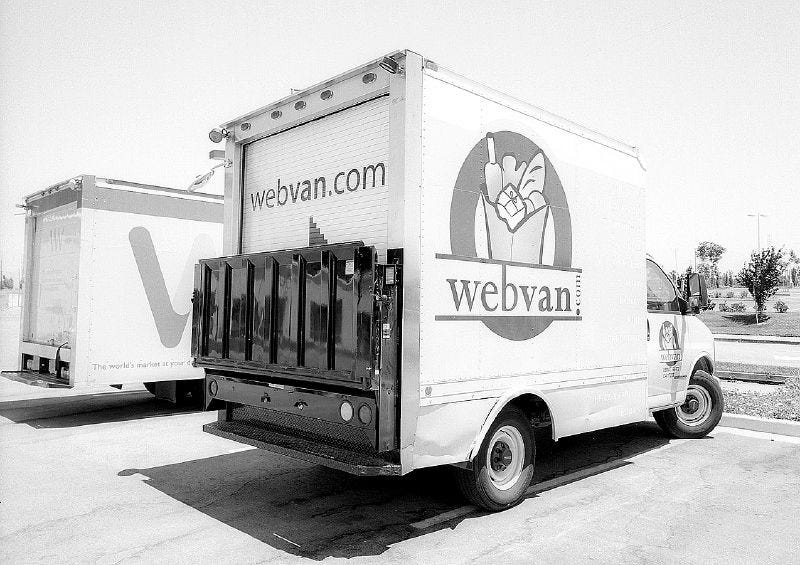
Webvan filed bankruptcy after spending heavily to build a nationwide grocery delivery network that never achieved profitability.
Uber — Executive Firing (2017)
Uber fired executive Eric Alexander after it emerged he had obtained and shared the medical records of an Indian rape victim, a shocking breach that underscored deeper cultural failures at the company.
Synchronoss Technologies — Fraud Charges (2022)
The Securities and Exchange Commission charged Synchronoss Technologies and seven former executives with accounting fraud tied to revenue recognition practices.
Kia — Product Recall (2024)
Kia recalled more than 460,000 Telluride SUVs over a fire risk, issuing a rare warning to park outside and away from buildings.
June 8
Pepsi-Cola — Bankruptcy (1923)
The Craven Holding Corp. purchased the Pepsi-Cola trademark, shortly after its founder Caleb Bradham declared bankruptcy. Bradham had marketed Pepsi since the 1890s but gambled on sugar price volatility and financial mismanagement, leading to his company’s bankruptcy just days earlier.
June 9
Scott Rothstein — Fraud Sentencing (2010)
Scott Rothstein was sentenced to 50 years in prison for running a $1.2 billion Ponzi scheme through his law firm. Read More: 15 Tales Of Lost Ponzi Riches (Blunder Lists)
June 10
Sam Waksal — Fraud Sentencing (2003)
Sam Waksal was sentenced to seven years and three months in prison for fraud, perjury, and tax evasion tied to the ImClone Systems insider trading scandal, a case that also ensnared Martha Stewart. Read More: Sam Waksal – ImClone Systems (Business Blunders Hall Of Shame)
June 11
Warnaco Group — Bankruptcy (2001)
Warnaco Group, the apparel maker behind Calvin Klein jeans, filed bankruptcy. Burdened by heavy debt, licensing disputes, and an overextended expansion strategy, the company’s collapse marked a sharp reversal for a major player in the fashion industry.
June 12
ING Bank — Settlement (2012)
ING Bank agreed to pay $619 million to settle criminal charges in the U.S. alleging that the Amsterdam-based banking giant illegally processed $2 billion in transactions for Cuban and Iranian clients.
General Electric — CEO Resignation (2017)
Jeff Immelt said he would step down as CEO of General Electric after years of declining performance at the industrial giant.
June 13
Revlon — Settlement (2013)
Revlon agreed to pay $850,000 to settle U.S. Securities and Exchange Commission charges that it misled shareholders during a going-private transaction controlled by its majority owner, a deal that drew scrutiny for favoring insiders over minority investors.
Ross Stores — Fraud Charges (2014)
Regulators charged four Northern California residents for insider trading in Ross Stores stock options based on nonpublic monthly sales information leaked by a Ross employee.
Terraform Labs — Settlement (2024)
Terraform Labs and its founder Do Kwon agreed to a $4.45 billion settlement with the Securities and Exchange Commission over the collapse of their cryptocurrency empire. Kwon later pleaded guilty to criminal charges and was sentenced to 15 years in prison. Read More: Kwon Don’t (Business Blunders)
June 14
South Sea Co. — Regulatory Action (1720)
Britain passed the Bubble Act after speculation around the South Sea Co. had reached a fever pitch. The trading company had been created to help manage government debt, and it drew investors into a frenzy with hype, easy credit, and political connections. The scandal became one of history’s most notorious examples of financial mania.
R. Allen Stanford — Fraud Sentencing (2012)
R. Allen Stanford was sentenced to 110 years in prison for orchestrating a $7 billion Ponzi scheme, one of the largest in U.S. history. Read More: 15 Tales Of Lost Ponzi Riches (Blunder Lists)
June 15
Rajat Gupta — Fraud Conviction (2012)
Rajat Gupta, the former head of McKinsey & Co. and a Goldman Sachs director, was convicted of insider trading for leaking confidential boardroom information to hedge fund founder Raj Rajaratnam. He later received a two-year prison sentence and a $5 million fine. Read More: Rajat Gupta – Goldman Sachs (Business Blunders Hall Of Shame)
Revlon filed bankruptcy as it grappled with a heavy debt load and supply chain disruptions that left it struggling to stock shelves and compete.
June 16
Pacific Gas and Electric — Guilty Plea (2020)

Pacific Gas and Electric pleaded guilty to 84 counts of involuntary manslaughter for its role in the 2018 Camp Fire, which killed 85 people and destroyed the town of Paradise, California.
June 17
Dennis Kozlowski — Fraud Conviction (2005)
Dennis Kozlowski, former CEO of Tyco International, was convicted on multiple counts including grand larceny, securities fraud and falsifying business records for looting the company of more than $100 million. Read More: Dennis Kozlowski – Tyco (Business Blunders Hall Of Shame)
Fisker — Bankruptcy (2024)
Fisker filed bankruptcy after burning through cash, struggling with production and quality issues on its Ocean SUV, and failing to secure a needed investment. It marked the second collapse of a company founded by Henrik Fisker after the earlier failure of Fisker Automotive in 2013. Read More: Fisker The Frisker (Business Blunders)
June 18
Apple — CEO Resignation (1993)
John Sculley stepped down as CEO of Apple after a series of strategic missteps, including an over-reliance on high-priced Macintosh models and a confusing product lineup. Under his leadership, the company had lost market share to lower-cost Windows PCs and struggled to define its direction.
OceanGate — Industrial Disaster (2023)
Stockton Rush, CEO of OceanGate, died when the company’s Titan submersible suffered a catastrophic implosion during a dive to the wreck of the RMS Titanic. The disaster came after years of reported warnings from industry experts about the vessel’s experimental design and safety practices. Read More: Sub Moron (Business Blunders)
June 19
Men’s Wearhouse — Executive Ouster (2013)
George Zimmer, founder and longtime spokesman of Men’s Wearhouse, was ousted by the company’s board, ending a decades-long run in which his persona were synonymous with the brand amid a growing rift over corporate governance and strategy. “You’re going to love the way you look,” he would advertise. “I guarantee it.” Read More: Zimmer a guaranteed fit for Treasury chief (The Denver Post)
Bear Stearns — Fraud Charges (2008)
Federal prosecutors indicted Ralph Cioffi and Matthew Tannin, former managers at Bear Stearns, on securities fraud and conspiracy charges tied to the collapse of two subprime mortgage hedge funds that helped foreshadow the financial crisis. After a four-week trial, a jury acquitted both men on all criminal counts on Nov. 10, 2009, in a major embarrassment to federal prosecutors.
June 20
U.S. Tobacco Industry — Settlement (1997)
Major tobacco companies and state attorneys general announced a proposed $368.5 billion national settlement, an ambitious deal that collapsed in Congress but paved the way for a historic agreement the following year.
Uber — CEO Resignation (2017)
Travis Kalanick resigned as CEO of Uber under pressure from major investors following a series of scandals and reports of a toxic workplace culture.
Walmart — Settlement (2019)
Walmart agreed to pay more than $282 million to resolve a U.S. investigation into possible violations of the Foreign Corrupt Practices Act. Authorities probed the retailer for allegedly paying bribes to accelerate store growth in Mexico, Brazil, India and China.
June 21
Penn Central — Bankruptcy (1970)
Penn Central Transportation Co. filed bankruptcy, then the largest corporate collapse in U.S. history, after its disastrous merger of the Pennsylvania Railroad and New York Central Railroad and years of financial mismanagement.
Intel — CEO Resignation (2018)
Brian Krzanich resigned as CEO of Intel after the company learned he had a past consensual relationship with an employee in violation of its policies. Read More: Lost In Love (Blunder Lists)
Rite Aid — Fraud Charges (2002)
Regulators charged Rite Aid and several former executives, including former CEO Martin Grass, with a massive accounting fraud that inflated earnings by billions of dollars.
June 22
Continental Congress — Regulatory Action (1775)
The Continental Congress authorized its first major issue of paper currency to fund the Revolutionary War. With nothing to back them and no reliable taxing power behind it, the notes quickly became a worthless.
Eastman Kodak — Product Shutdown (2009)
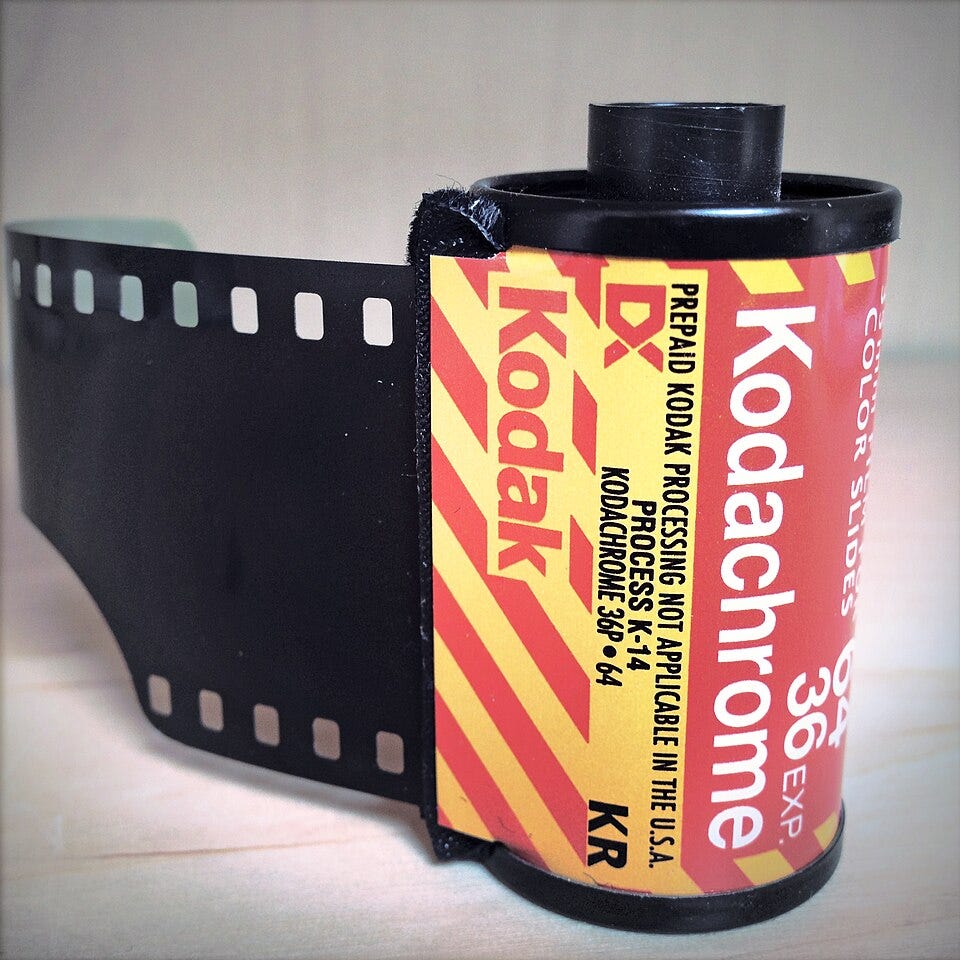
Eastman Kodak announced it would stop selling its iconic Kodachrome film, ending a 74-year run as digital photography overtook the company’s core business. Read More: The Biggest Business Blunders Of All Time (Blunder Lists)
Gold Standard Baking — Bankruptcy (2022)
Gold Standard Baking, a major supplier of croissants and baked goods to restaurants and retailers, filed bankruptcy, citing rising labor and operating costs that strained its business.
June 23
United Kingdom — Market Disruption (2016)
The United Kingdom voted to leave the European Union in the Brexit referendum, a decision that triggered market turmoil and has since acted as a long-lasting drag on economic growth.
Wirecard — Executive Arrest (2020)
Markus Braun, the former chief executive of Wirecard, a digital payments and financial services company, was arrested after turning himself in to prosecutors, a day after the German company admitted that €1.9 billion in cash likely did not exist.
June 24
Breitling Energy — Fraud Charges (2016)
The U.S. Securities and Exchange Commission charged Christopher A. Faulkner, a media commentator who called himself the “frack master,” in an $80 fraud scheme. Faulkner ran Breitling Energy, Crude Energy and Patriot Energy. He received a 15-year prison sentence after duping investors with inflated drilling costs and fake geology reports.
June 25
WorldCom — Accounting Scandal (2002)
WorldCom disclosed that it had improperly booked more than $3.8 billion in operating expenses as capital expenditures, one of the largest accounting frauds in U.S. history. It also said it fired Chief Financial Officer Scott Sullivan.
Adelphia Communications — Bankruptcy (2002)
Adelphia Communications filed bankruptcy after a fraud that hid billions in debt brought down one of the nation’s largest cable companies.
CEC Entertainment — Bankruptcy (2020)
CEC Entertainment, parent of Chuck E. Cheese, filed bankruptcy as pandemic shutdowns hammered its business, forcing store closures.
June 26
HCA — Settlement (2003)
HCA Healthcare, formerly Columbia/HCA Healthcare, agreed to pay $631 million to settle allegations that it submitted false claims to Medicare, part of what was then the largest healthcare fraud case in U.S. history. Former CEO Rick Scott had resigned years earlier and later became Florida’s governor and U.S. senator.
Read More:
The Outrageous Acts Of Criminally Charged Corporations (Blunder Lists)
The Wizard Of Oz Goes To Washington (Business Blunders)
June 27
America West Airlines — Bankruptcy (1991)
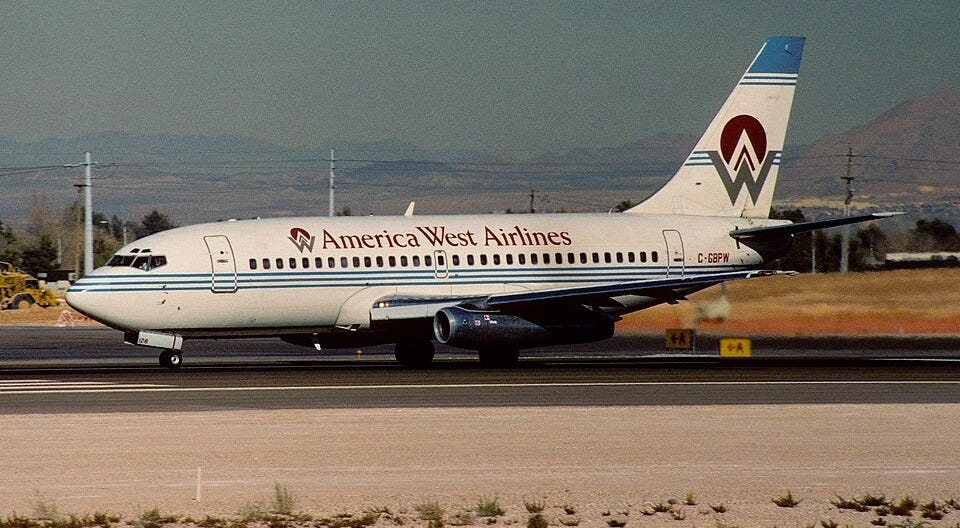
America West Airlines filed bankruptcy as high debt and rising fuel costs following the Gulf War strained the Phoenix-based carrier; it later emerged from bankruptcy in 1994.
John Rigas — Fraud Sentencing (2005)
John Rigas, founder of Adelphia Communications, was sentenced to 15 years in prison for his role in a multibillion-dollar fraud that looted the cable television company. The Securities and Exchange Commission called it “one of the most extensive financial frauds ever to take place at a public company.”Read More: John Rigas – Adelphia Communications (Business Blunders Hall Of Shame)
Barclays — Settlement (2012)
Barclays agreed to pay $450 million in fines to U.S. and U.K. regulators to settle allegations it manipulated the LIBOR benchmark interest rate, triggering global investigations into rate-rigging by major banks.
June 28
Volkswagen — Settlement (2016)
Volkswagen agreed to a $14.7 billion U.S. settlement over “Dieselgate,” an emissions cheating scheme that ultimately cost it more than $33 billion in sanctions and settlements.
Read More:
Slipping Away From Prosecutors (Business Blunders)
Fuel For Fools (Business Blunders)
June 29
Richard Scrushy — Fraud Conviction (2006)
Richard Scrushy was convicted in a public corruption case involving a scheme to buy a state regulatory seat, months after being acquitted in the HealthSouth fraud trial. Read More: Richard Scrushy – HealthSouth (Business Blunders Hall Of Shame)
Tenet Healthcare — Massive Fraud Settlement (2006)
Tenet Healthcare agreed to pay more than $900 million to resolve allegations involving unlawful billing practices and kickbacks for patient referrals. Federal prosecutors said the arrangements tainted claims submitted to Medicare and other government programs.
Bernard Madoff — Fraud Sentencing (2009)
Bernard Madoff was sentenced to 150 years in prison for running a decades-long Ponzi scheme that defrauded investors of tens of billions of dollars, one of the largest frauds in financial history. Read More: Bernie Madoff – Madoff Securities (Business Blunders Hall Of Shame)
June 30
Jeffrey Epstein — Guilty Plea (2008)
Jeffrey Epstein pleaded guilty to state prostitution charges involving a minor and was sentenced to 18 months, a controversial deal that drew widespread criticism, particularly after his sentence included work-release. Read More: Banking On Epstein (Business Blunders)
LifeLock — Fraud Settlement (2010)
The Wall Street Journal featured a LifeLock advertisement in which CEO Todd Davis displayed his real Social Security number, part of a “dare” that resulted in his identity being stolen at least 13 times. The campaign, which featured the number on billboards and print media, prompted a FTC investigation, culminating in a $12 million settlement over deceptive advertising.
Lee Farkas – Mortgage Fraud Sentencing (2011)
Lee Farkas, chairman of Taylor, Bean & Whitaker, was sentenced to 30 years in prison for orchestrating a multibillion-dollar fraud tied to fake and double-pledged mortgage assets. Prosecutors said the scheme helped topple Colonial Bank during the financial crisis.
Fox News — Settlement (2023)
Fox News agreed to pay $12 million to settle lawsuits brought by Abby Grossberg, who alleged she was coerced into giving misleading testimony in litigation tied to Dominion Voting Systems, which had accused the network of defamation over false claims about the 2020 election.