

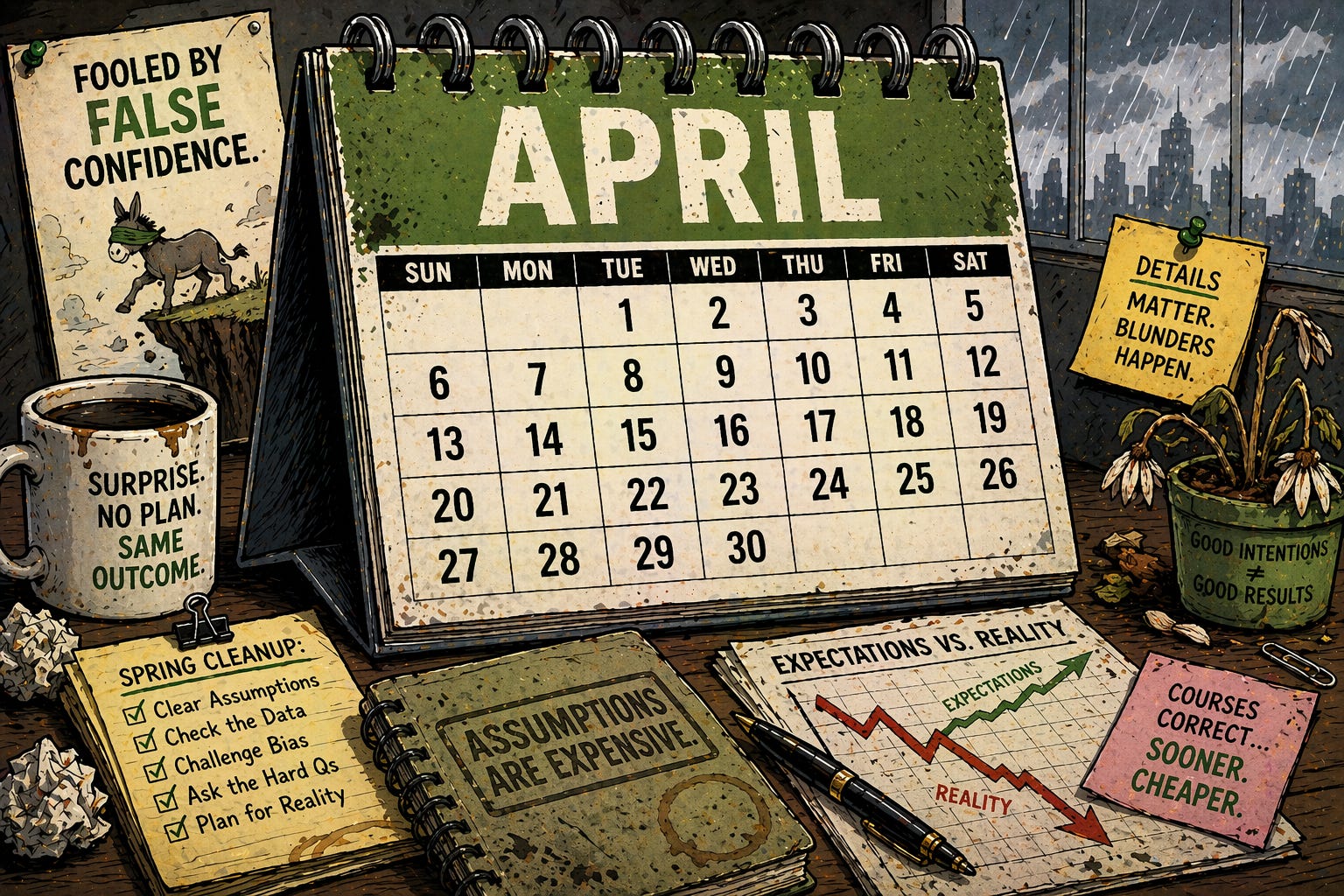
This archive tracks major business blunders that occurred on each day in April, from historic corporate collapses to modern fraud cases and executive failures.
April 1
IBM — CEO Resignation (1993)
IBM CEO John Akers retired following a tumultuous period that included a $5 billion annual loss and pressure from the board to resign.
Highmark — CEO Firing (2012)
Highmark fired CEO Kenneth Melani after his arrest. He reportedlt had a physical altercation involving the husband of a female employee with whom he had a relationship. A personal scandal at the top quickly became a corporate crisis, ending his tenure overnight. Read More: Lost In Love (Blunder Lists)
Whiting Petroleum — Bankruptcy (2020)
Whiting Petroleum filed bankruptcy, becoming the first major U.S. shale producer to collapse as oil prices plunged. A debt-fueled drilling boom unraveled when crude prices crashed, sending the company into bankruptcy.
April 2
Starwood Hotels & Resorts — CEO Resignation (2007)
Starwood Hotels & Resorts forced CEO Steven Heyer to resign following a clash with the board over his management style and allegations of personal misconduct with women sent in an anonymous letter. He reportedly agreed to forfeit an estimated $35 million in severance compensation. Read More: Lost In Love (Blunder Lists)
New Century Financial — Bankruptcy (2007)
New Century Financial filed bankruptcy as mortgage defaults surged. A lender built on risky subprime loans collapse, foreshadowing the housing crisis to come. Top executives later faced civil fraud charges.
April 3
Panama Papers — Legal Exposure (2016)
The International Consortium of Investigative Journalists published the Panama Papers exposing how some of the world’s wealthiest people illegally hide assets in offshore accounts to avoid taxes, evade sanctions and conceal crime and corruption.
April 4
Virgin Orbit — Bankruptcy (2023)
Virgin Orbit, founded by Richard Branson, filed bankruptcy after failing to secure funding following a failed rocket launch. A high-profile space venture ran out of cash when its technology and business mode fell short.
April 5
Wachovia Capital Markets — Settlement (2011)
Regulators announced an $11 million settlement with Wachovia Capital Markets, alleging misconduct in selling the kind of toxic debt that collapsed the economy in 2008: Collateralized debt obligations tied to mortgage-backed securities. Wells Fargo Securities, which acquired Wachovia, paid the fine.
April 6
Blockbuster — Acquisition (2011)
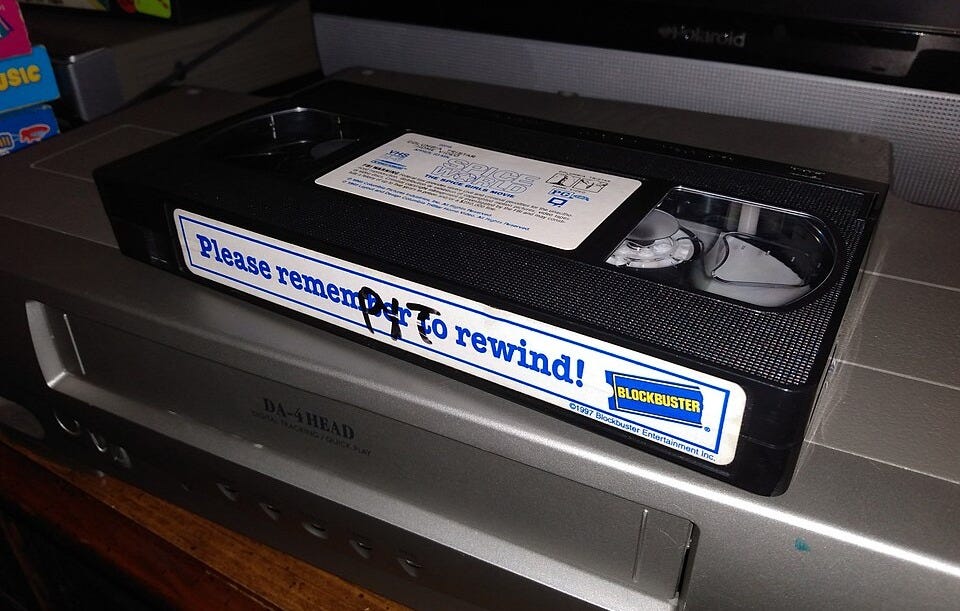
Dish Network won a bankruptcy auction to acquire Blockbuster for $320 million, hoping to compete with Netflix. The deal included more than 1,700, almost all of which it closed by 2014.
April 7
Teapot Dome — Fraud Scandal (1922)
Interior Secretary Albert B. Fall secretly leased the Teapot Dome oil reserves in Wyoming to his friend Harry F. Sinclair without competitive bidding. It became one of the worst political scandals in American history – at least at the time.
99 Cents Only Stores — Bankruptcy (2024)
99 Cents Only Stores filed bankruptcy and announced plans to close all 371 U.S. stores. Rising costs and thin margins crushed the discount chain. A business built on razor-thin margins couldn’t survive rising costs.
April 8
Tom Petters — Fraud Sentencing (2010)
Tom Petters, whose company once owned Polaroid and Sun Country Airlines, was sentenced to 50 years in federal prison after being convicted of orchestrating a $3.65 billion Ponzi scheme and related frauds. Read More: 15 Tales Of Lost Ponzi Riches (Blunder Lists)
JC Penney — CEO Resignation (2013)
Ron Johnson resigned as CEO of JC Penney after a failed turnaround that gutted sales and alienated core customers. The former Apple retailing executive scrapped discounts and reinvented stores only to drive shoppers away. Read More: The Biggest Business Blunders Of All Time (Blunder Lists)
April 9
Backpage — Shutdown (2018)
The Federal Bureau of Investigation and other U.S. authorities seized and shut down Backpage following an investigation into its role in facilitating illegal activity. What was billed as a classifieds platform became a hub for illicit transactions until the government shut it down.
Helios Technologies — CEO Resignation (2020)
Wolfgang H. Dangel stepped down as CEO of Helios Technologies following a personal relationship that violated company policy. A leadership lapse at the top quickly became a corporate problem, ending his tenure. Read More: Lost In Love (Blunder Lists)
Publishers Clearing House — Bankruptcy (2025)
Publishers Clearing House filed bankruptcy citing surging online competition, rising costs and crushing debt. The sweepstakes icon known for showing up on prize doorsteps with oversize checks, stiffed its “forever winners” and sold what was left to ARB Interactive, a mobile gaming company.
April 10
Best Buy — CEO Resignation (2012)
Brian Dunn resigned as CEO of Best Buy amid a board investigation. The company later disclosed that he’d exercised poor judgment in a close personal relationship with a female employee that violated company policy. Read More: Lost In Love (Blunder Lists)
April 11
New York Stock Exchange — Fraud Sentencing (1938)
Former New York Stock Exchange president Richard Whitney was sentenced to prison on grand larceny charges. The so-called “White Knight of Wall Street” had misappropriated funds from clients as well as the NYSE Gratuity Fund, set up for widows and orphans. Read More: Richard Whitney – New York Stock Exchange (Business Blunders Hall Of Shame)
Borders Group — Acquisition Blunder (2001)
Borders Group partnered with Amazon to handle its online sales. The bookstore chain outsourced e-commerce to a competitor and gave away its digital future. Read More: The Biggest Business Blunders Of All Time (Blunder Lists)
Xerox — Settlement (2002)
Xerox agreed to pay a $10 million civil penalty to the to settle accounting fraud charges. At the time, it was the largest penalty ever imposed on a public company in by the Securities and Exchange Commission.
April 12
Texaco — Bankruptcy (1987)
Texaco filed bankruptcy to manage a $10.5 billion judgment that it owed to Pennzoil. In a blockbuster legal judgment, a court had found that Texaco unlawfully interfered with Pennzoil’s deal to acquire Getty Oil. It was the largest bankruptcy in U.S. history at the time – a record that stood until Enron shattered it in 2001.
April 13
American Tissue — Fraud Conviction (2005)
American Tissue Corp.’s former CEO Mehdi Gabayzadeh was convicted in a $300 million bank and securities fraud scheme that bankrupted the nation’s fourth-largest tissue and pulp manufacturer and left 2,700 workers unemployed. He was later sentenced to 15 years in prison and ordered to forfeit $65 million.
SCWorx — Fraud Scheme (2020)
SCWorx Corp. issued a bogus press release claiming it would supply millions of Covid-19 test kits, sending its stock soaring more than 400%. The deal didn’t exist, turning a pandemic-era announcement into a textbook market manipulation scandal.
Wilder Fitness Equipment — Bid-Rigging (2021)
Four individuals and Wilder Fitness Equipment pleaded guilty in federal bid-rigging cases tied to contracts for fitness equipment sold to schools, universities and other institutions. Prosecutors said the conspirators coordinated bids and manipulated the competitive process while falsely presenting contracts as fairly contested.
April 14
Lincoln Savings & Loan — Collapse (1989)
Federal regulators seized Lincoln Savings and Loan after risky investments and accounting maneuvers left it insolvent. One of the largest failures of the savings and loan crisis, the collapse helped expose widespread abuses across the industry. Read More: Charles Keating – Lincoln Savings & Loan (Business Blunders Hall Of Shame)
U.S. Tobacco Industry — Legal Action (1994)
Seven Big Tobacco CEOs testified before Congress that nicotine was not addictive, a claim later undermined by their own internal records.
Bernard Madoff — Death (2021)
Bernie Madoff died in federal prison at age 82. He’d served 12 of his 150-year prison sentence for swindling billions from trusting clients in what was one of history’s largest Ponzi schemes. Read More: Bernie Madoff – Madoff Securities (Business Blunders Hall Of Shame)
April 15
RMS Titanic — Industrial Disaster (1912)
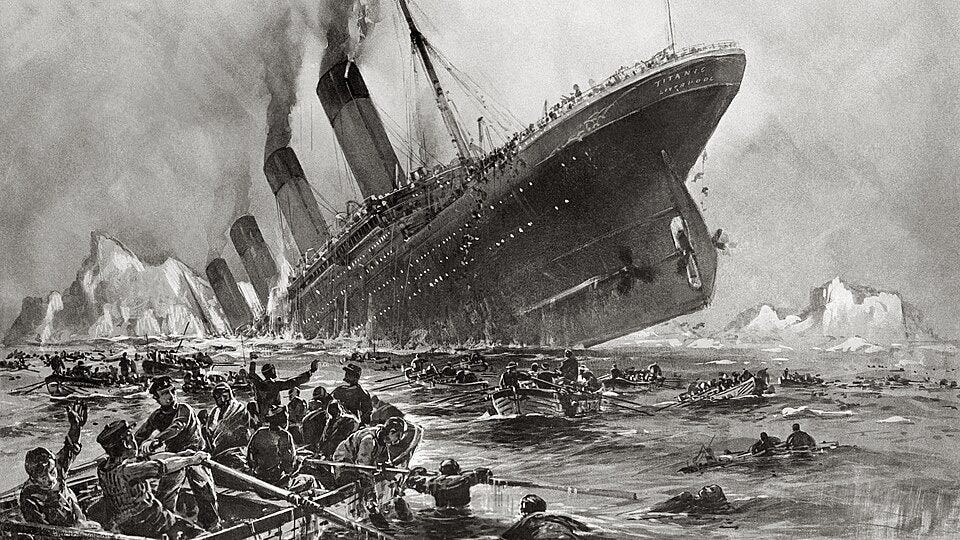
The RMS Titanic, a supposedly “unsinkable” British ocean liner, hit an iceberg. The tragedy took the lives of more than 1,500 passengers and crew, and it exposed fatal overconfidence in technology and safety planning. It also stunned underwriters at Lloyds of London.
Schlitz Brewing — Acquisition (1982)
Joseph Schlitz Brewing agreed to a $495 million merger with Stroh Brewing, ending the Milwaukee brewer’s independence after years of declining sales and labor unrest.
Volkswagen — Fraud Charges (2019)
Martin Winterkorn, former CEO of Volkswagen, was charged in Germany with fraud, breach of trust, and competition violations tied to its emissions scandal. The company rigged millions of cars to cheat emissions tests in what became known worldwide as “dieselgate.” He was later charged in the U.S. Read More: Slipping Away From Prosecutors (Business Blunders)
April 16
Cisco Systems — Profit Warning (2001)
Cisco Systems issued a major profit warning, signaling how sharply demand had collapsed during the dot-com bust. The warning punctured tech optimism, confirming the depth of the crash.
General Growth Properties — Bankruptcy (2009)
General Growth Properties, one of the nation’s largest shopping mall operators, filed what was then one of the largest real estate bankruptcies in U.S. history. With more than $27 billion in debt from aggressive acquisitions, it couldn’t withstand the 2008 financial crisis.
April 17
Alfred Taubman — Death (2015)
Shopping mall developer A. Alfred Taubman died at age 91. As the former chairman of auction house Sotheby’s, he spent less than a year in prison after his conviction on price fixing charges. In 2001, a federal grand jury indicted Taubman, for conspiring with Christie’s to fix commission rates. The rival auction houses secretly coordinated fees, rigging prices in the high-end art market.
Enron — Executive Misconduct (2001)
Enron CEO Jeffrey Skilling publicly snapped at an analyst’s question about missing financial disclosures with Thank you very much… asshole,” a startling display of executive tone-deafness that would become emblematic of the company’s culture of opacity and hubris. Read More: CEOs Say The Dumbest Things (Blunder Lists)
InfoWars — Bankruptcy (2022)
InfoWars filed bankruptcy as legal pressure mounted over false claims by its founder, Alex Jones, about the Sandy Hook Elementary School shooting. Families won massive defamation verdicts after he falsely called the massacre a hoax, turning conspiracy into a financial collapse.
April 18
Charles L. Webster & Co. — Bankruptcy (1894)
The publishing firm founded by Mark Twain filed bankruptcy. The collapse of Charles L. Webster and Co. helped drive one of the greatest American authors to financial ruin. “A lack of money,” Twain once quipped, “is the root of all evil.”
Williams-Sonoma — Fraud Charges (2023)
A former executive at Williams-Sonoma was charged along with three others in an alleged multimillion-dollar fraud scheme. Prosecutors said the group diverted company funds and falsified records, turning a corporate role into a personal payday.
Fox News — Settlement (2023)
Fox News agreed to pay $787.5 million to settle a defamation lawsuit brought by Dominion Voting Systems over false claims about the 2020 election.
April 19
Fox News — Executive Firing (2017)
Fox News fired Bill O’Reilly after reports of sexual harassment settlements totaling $13 million made for a scandalous headline in the New York Times. Though he denied the allegations, news of the quiet settlements sparked a costly advertiser boycott and ended his two-decade run as the network’s top-rated host. Read More: Ponzi Once, Ponzi Twice (Business Blunders)
April 20
Deepwater Horizon — Industrial Disaster (2010)
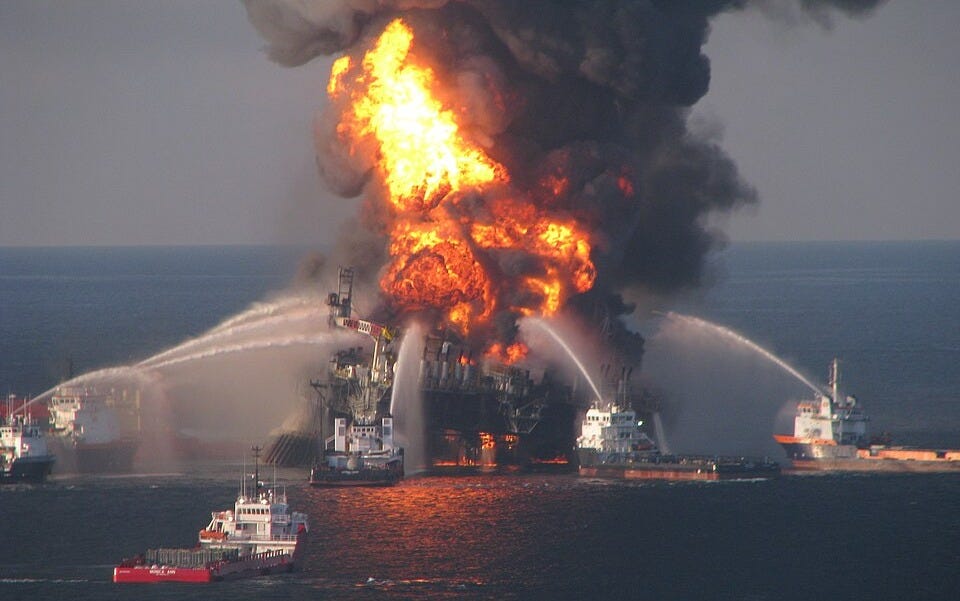
The Deepwater Horizon exploded and sank, triggering the largest marine oil spill in U.S. history. Safety failures and cost-cutting decisions led to a catastrophic blowout, killing 11 workers and spilling millions of barrels of oil into the Gulf. Read More: The Biggest Business Blunders Of All Time (Blunder Lists)
Wells Fargo — Settlement (2018)
Wells Fargo was fined $1 billion for auto-loan insurance and mortgage rate-lock abuses. Customers were charged for unwanted insurance and misled on mortgage fees, adding to the bank’s growing list of scandals.
U.S. Oil Markets — Market Crash (2020)
The price for a barrel of West Texas Intermediate crude oil dropped below zero for the first time in history. Oil companies had to pay someone to take it given a massive oversupply and lack of storage space during the pandemic. WTI closed at NEGATIVE $37.63.
April 21
Steven Hoffenberg — Guilty Plea (1995)
Towers Financial CEO Steven Hoffenberg pleaded guilty to running a $400 million Ponzi scheme that collapsed in 1993. The operation, one of the largest frauds of its era, counted a young Jeffrey Epstein as a paid consultant during its rise. Hoffenberg was later sentenced to 20 years in prison.
SunEdison — Bankruptcy (2016)
SunEdison filed bankruptcy after a debt-fueled acquisition binge collapsed under its own weight, toppling what had been one of the fastest-growing names in solar.
Volkswagen — Criminal Settlement (2017)
A federal judge in Detroit sentenced Volkswagen to three years of probation and a $2.8 billion criminal penalty for “dieselgate.” The German automaker sold cars that cheated on emissions tests. Read More: Slipping Away From Prosecutors (Business Blunders)
April 22
Electronic Data Systems — Market Loss (1970)
Ross Perot lost nearly $450 million. It was then the largest one-day paper loss that any one person had ever suffered on the New York Stock Exchange. Stock of his Plano, Texas-based Electronic Data cratered in a broader tech bust that followed years of frothy valuations.
Express — Bankruptcy (2024)
Express Inc. filed bankruptcy after years of declining sales and mounting losses. A mall-based fashion chain couldn’t keep up with shifting trends and online competition, ending in store closures and restructuring.
April 23
Coca-Cola — Product Failure (1985)
Coca-Cola launched “New Coke,” replacing its original formula. The reformulation sparked a consumer backlash, forcing the company to bring back “Coca-Cola Classic” just months later. Read More: The Biggest Business Blunders Of All Time (Blunder Lists)
Ratners Group — Executive Misconduct (1991)
Gerald Ratner famously joked that his London-based jewelry company’s products were “total crap” during a speech at the Royal Albert Hall. The gaffe crushed sales and sparked a £500 million loss in stock value at Ratners, his namesake retailer. Read More: CEOs Say The Dumbest Things (Blunder Lists)
April 24
Wickes Companies — Bankruptcy (1982)
Wickes Companies filed bankruptcy after a debt-heavy acquisition strained its finances. A leveraged expansion left the building supplies and home improvement retailer unable to service its debt.
Michael Milken — Guilty Plea (1990)
Michael Milken pled guilty to a six-count felony information charging him with conspiracy, securities fraud, mail fraud, market manipulation and tax fraud. He served only about two years of a ten-year prison sentence, but burnished his reputation as a symbol of Wall Street fraud in the 1980s. Read More: Michael Milken – Drexel Burnham Lambert (Business Blunders Hall Of Shame)
NBCUniversal — CEO Firing (2023)
Jeff Shell was fired as CEO of NBCUniversal after an investigation into sexual harassment allegations. A top executive’s misconduct forced a sudden exit at one of the world’s largest media companies. Read More: Lost In Love (Blunder Lists)
April 25
Wachovia — Settlement (2008)
Wachovia, now part of Wells Fargo, agreed to pay $144 million in restitution and penalties after admitting that it allowed telemarketers to pull money directly from customer accounts without proper authorization. Scammers got direct access to people’s bank accounts, and the bank didn’t stop them.
April 26
Chernobyl Nuclear Plant — Industrial Disaster (1986)
Shoddy reactor design and flawed safety tests at the Chernobyl Nuclear Power Plant in Ukraine lead to the world’s worst nuclear power plant accident. The disaster released a radioactive plume and set back nuclear power development for decades.
Computer Associates — Accounting Scandal (2004)
Computer Associates said it would restate $2.2 billion in revenue after an internal investigation found sales had been booked prematurely. The company pulled revenue forward to inflate results, turning fake growth into an accounting problem. Top executives later plead guilty to manipulating $2 billion in revenue and received prison sentences.
April 27
Archegos Capital Management — Fraud Charges (2022)
Federal prosecutors charged Bill Hwang following the $36 billion collapse of private investment firm Archegos Capital Management. Prosectors alleged Hwang and others they lied to banks to borrow billions and used the money to inflate a handful of stocks. When the bubble burst billions vanished almost overnight. “The lies fed the inflation, and the inflation led to more lies,” prosecutors said. Hwang was sentenced to 18 years in prison. Read More: Billion Dollar Reprobate (Business Blunders)
April 28
Bennett Funding Group — Fraud Sentencing (2000)
Patrick R. Bennett, former chief financial officer of Bennett Funding Group, was sentenced to 30 years in prison for his role in a massive Ponzi scheme. The company sold bogus leases to investors and used new money to pay old obligations until the scheme collapsed. Read More: 15 Tales Of Lost Ponzi Riches (Blunder Lists)
Wall Street Firms — Settlement (2003)
Regulators announced a $1.4 billion settlement with major Wall Street firms – including Merrill Lynch, Goldman Sachs, Morgan Stanley, Citigroup, Credit Suisse First Boston, Lehman Brothers, JPMorgan Chase, UBS Warburg, U.S. Bancorp and Piper Jaffray – over misleading stock research. Analysts hyped stocks to win business, leaving investors in the lurch when the dot.com bubble burst. Read More: The Outrageous Acts Of Criminally Charged Corporations (Blunder Lists)
Jack Grubman — Settlement (2003)
Jack Grubman, a star analyst at Salomon Smith Barney, agreed to pay $15 million and be barred from the securities industry over civil allegations he issued biased stock research to win investment banking business. He hyped companies he privately doubted, leaving investors in harms way as the dot.com bubble burst.
Priceline Group — CEO Resignation (2016)
Darren Huston resigned as CEO of Priceline Group after an internal investigation found he had a personal relationship with an employee in violation of company policy. Read More: Lost In Love (Blunder Lists)
Federal Reserve — Policy Statement (2021)
Federal Reserve Chairman Jerome Powell described rising inflation as “transitory.” Inflation didn’t go away anytime soon and Fed had to catch up. Read More: Our Deadhead Fed Head (Business Blunders)
April 29
Commodore International — Bankruptcy (1994)
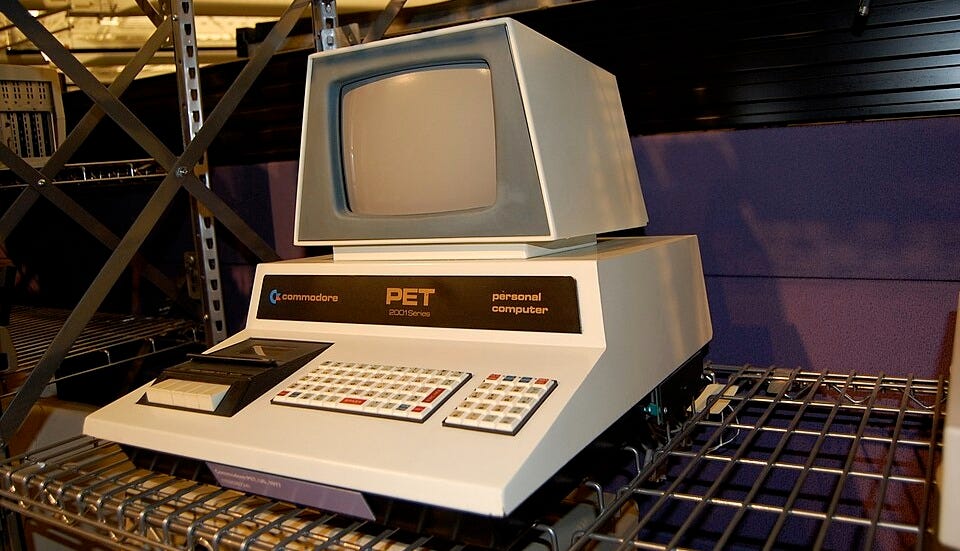
Commodore International filed bankruptcy and shut down after years of financial struggles, mismanagement and an inability to compete in a fast-changing PC era. In the 1980s, the Commodore 64 dominated in the U.S. while Commodore’s Amiga was wildly popular in Europe.
April 30
Chrysler — Bankruptcy (2009)
Chrysler filed bankruptcy and announced an alliance with Fiat with backing from the federal government. The iconic automaker was controlled by Cerberus Capital Management, a private equity firm that underinvested, and left taxpayers to help pick up the pieces.
Kolon Industries — Guilty Plea (2015)
The South Korean industrial company pleaded guilty to conspiring to steal DuPont trade secrets involving Kevlar, the high-strength synthetic fiber used in military, industrial and commercial products. Federal prosecutors said Kolon employees improperly obtained confidential manufacturing information from former DuPont workers in an effort to shortcut years of costly research and development.