

This archive tracks major business blunders that occurred on each day in August, from historic corporate collapses to modern fraud cases and executive failures.
Aug. 1
British Airways / Korean Air — Guilty Plea (2007)
British Airways and Korean Air pleaded guilty to fixing air cargo prices as part of a global cartel that inflated shipping costs. Each agreed to pay $300 million in criminal fines. Read More: The Outrageous Acts Of Criminally Charged Corporations (Blunder Lists)
Aug. 2
Wade Cook — Fraud Sentencing (2007)
Wade Cook, author of “Wall Street Money Machine,” was sentenced to more than seven years in prison for tax fraud tied to his investment seminar empire. Read More: Wade Cook – Wade Cook Financial Corp (Business Blunders Hall Of Shame)
Lord & Taylor — Bankruptcy (2020)
Lord & Taylor filed bankruptcy, a collapse that soon led to the liquidation of its stores and the end of the historic department store chain.
Brookstone — Bankruptcy (2018)
Brookstone filed bankruptcy for the second time in four years, as declining mall traffic and missteps hurt sales of its gadgets, massage chairs and travel gear.
Aug. 3
Bank of America — Settlement (2009)
Bank of America agreed to pay $33 million to settle U.S. Securities and Exchange Commission charges that it misled investors about billions in bonuses paid to Merrill Lynch employees during the financial crisis.
Aug. 4
Bristol-Myers Squibb — Settlement (2004)
Bristol Myers Squibb agreed to pay $150 million to resolve charges regarding a fraudulent earnings management scheme. The company was accused of channel stuffing to inflate revenue by $1.5 billion between 2000 and 2001.
Martin Shkreli — Fraud Conviction (2017)
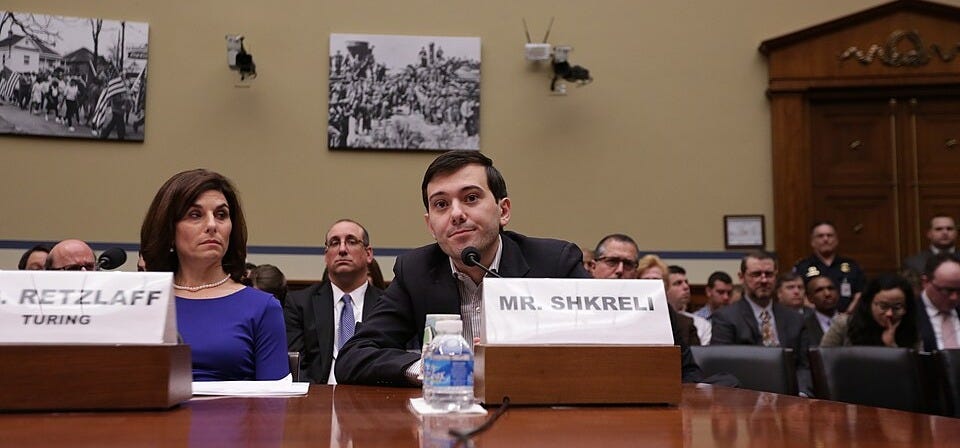
Martin Shkreli, the “Pharma Bro” who raised the price of a life-saving drug from $13.50 to $750 per pill overnight, was convicted of securities fraud for deceiving hedge fund investors. He was later sentenced to seven years in prison. Read More: Martin Shkreli – Turing Pharmaceuticals (Business Blunders Hall Of Shame)
Aug. 5
Standard & Poor’s — Credit Downgrade (2011)
Standard & Poor’s downgraded the United States’ sovereign credit rating from AAA to AA+, the first such cut in U.S. history, a rating it has never regained.
Aug. 6
Gerald Payne — Fraud Sentencing (2001)
Gerald Payne, founder of Greater Ministries International, was sentenced to 27 years in prison for running a $500 million Ponzi scheme that defrauded more than 18,000 investors. Read More: 15 Tales Of Lost Ponzi Riches (Blunder Lists)
Hewlett-Packard — CEO Resignation (2010)
Hewlett-Packard announced the resignation of CEO Mark Hurd following a sexual harassment claim by a former contractor. Read More: Lost In Love (Blunder Lists)
Barneys New York — Bankruptcy (2019)
Barneys New York filed bankruptcy, citing soaring rent costs at its flagship stores among the pressures squeezing the high-end retailer.
Aug. 7
Love Canal / Hooker Chemical — Industrial Disaster (1978)
Jimmy Carter declared a federal health emergency at Love Canal after toxic waste buried by Hooker Chemical Co. contaminated the community.
Aug. 8
Lance Poulsen — Fraud Sentencing (2008)
Lance K. Poulsen, former CEO of National Century Financial Enterprises, was sentenced to 10 years in prison for witness tampering tied to a $3 billion securities fraud scheme.
Robert Shapiro — Fraud Sentencing (2019)
Robert H. Shapiro of the Woodbridge Group was sentenced to 25 years in prison for running a $1.3 billion Ponzi scheme that duped thousands of investors. Read More: 15 Tales Of Lost Ponzi Riches (Blunder Lists)
Aug. 9
Resolution Trust Corp. — Regulatory Action (1989)
George H. W. Bush signed a law creating the Resolution Trust Corp. to clean up failed savings and loans in a taxpayer-backed bailout following years of reckless lending and fraud.
Firestone / Ford Motor Co. — Product Recall (2000)
Firestone and Ford Motor Co. announced a recall of 6.5 million tires linked to deadly rollovers, a crisis that exposed safety failures and strained one of the auto industry’s longest-standing partnerships.
Aug. 10
Jeffrey Epstein — Death (2019)
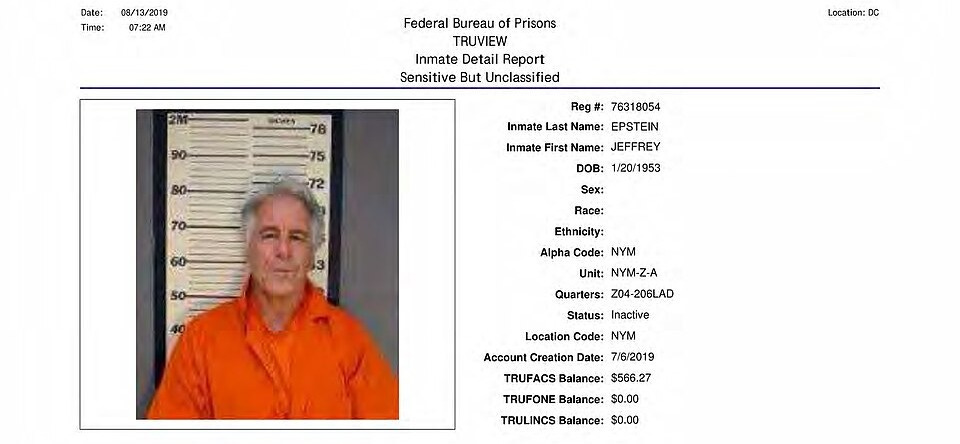
Jeffrey Epstein was found dead in the Metropolitan Correctional Center in New York while awaiting trial. The city’s medical examiner later ruled his death a suicide. Read More: Party With Mr. Dahmer (Business Blunders)
Donald Trump — Legal Action (2022)
Donald Trump invoked the Fifth Amendment during a deposition in a civil investigation by the New York Attorney General’s Office into his business practices. The probe later resulted in a civil fraud judgment against him and The Trump Organization.
Aug. 11
Sam Bankman-Fried — Bail Revocation (2023)
Sam Bankman-Fried was jailed after a judge revoked his bail over witness tampering concerns in the FTX fraud case. Read More: Sam Bankman-Fried – FTX (Business Blunders Hall Of Shame)
Aug. 12
Mexico — Debt Default (1982)
Mexico told U.S. officials and international lenders it could no longer service its foreign debt, triggering the Latin American debt crisis, a shock that plunged the region into a “Lost Decade” before relief arrived years later.
Do Kwon — Guilty Plea (2025)
Do Kwon, co-founder of Terraform Labs, pleaded guilty to fraud tied to the $40 billion collapse of the TerraUSD and Luna cryptocurrencies. He was later sentenced to 25 years in prison. Read More: Kwon Don’t (Business Blunders)
Aug. 13
Henry Ford — Product Failure (1941)

Henry Ford unveiled his “soybean car” featuring a plastic body that was partially made from the legumes and hemp. He claimed it would revolutionize auto manufacturing. It never went into production.
Midway Airlines — Bankruptcy (2002)
Midway Airlines filed bankruptcy, becoming one of the many aviation casualties of the post-9/11 downturn as rising costs and collapsing demand grounded yet another carrier.
Mark Frissora — Settlement (2020)
Regulators charged Mark Frissora, the former CEO of Hertz Global Holdings, with aiding and abetting the company’s inaccurate financial reporting. Regulators said he pressured employees to “find money” through accounting changes that inflated results and misled investors. Frissora agreed to repay nearly $2 million in bonuses and a civil penalty.
Aug. 14
Colonial Bank — Collapse (2009)
Colonial Bank of Montgomery, Ala., with roughly $25 billion in assets, was seized by regulators, marking one of the largest bank collapses of the financial crisis. The downfall was fueled by a massive mortgage fraud involving Taylor Bean & Whitaker of Ocala, Fla., which left the bank holding billions in bogus assets.
Jeffrey Skilling — CEO Resignation (2001)
Jeffrey Skilling abruptly resigned as CEO of Enron, citing “personal reasons,” just months before the company’s accounting scandal unraveled into one of the largest corporate collapses in U.S. history. Read More: Jeffrey Skilling – Enron (Business Blunders Hall Of Shame)
Aug. 15
Richard Nixon — Regulatory Action (1971)
Richard Nixon ended the gold standard for the U.S. dollar and imposed a 90-day nationwide freeze on wages and prices in an unprecedented bid to curb inflation. The sweeping measures, announced as part of his “New Economic Policy,” marked a dramatic expansion of federal control over the economy and a turning point in modern monetary policy.
Reliant Energy — Settlement (2005)
California Attorney General Bill Lockyer announced a $460 million settlement with Reliant Energy to resolve claims it gouged ratepayers, withheld power, and manipulated electricity and natural gas prices during the California energy crisis of 2000–01.
Aug. 16
Toronto Stock Exchange — Trading Halt (1989)
A powerful solar flare triggered a geomagnetic storm that disrupted computer systems and forced the Toronto Stock Exchange to halt trading, a reminder that even financial markets aren’t immune to space weather and that problems can hit from 93 million miles away.
Countrywide Financial — Liquidity Crisis (2007)
Countrywide Financial drew down its entire $11 billion emergency credit line as funding markets seized and fears of bankruptcy mounted. The same day, Fitch Ratings downgraded the company to BBB+, just above junk status, as the subprime mortgage crisis began to engulf the largest lender in the U.S.
Aug. 17
Phar-Mor — Bankruptcy (1992)
Phar-Mor, then one of the fastest-growing drugstore chains in the U.S., filed bankruptcy amid revelations of a massive accounting fraud that ultimately totaled more than $1 billion. Read More: Michael “Micky” Monus – PharMor (Business Blunders Hall Of Shame)
Tobacco Industry — Regulatory Action (2006)
A U.S. District Judge ruled that major tobacco companies had violated federal racketeering laws by deceiving the public about the health risks of smoking for 50 years, ordering them to issue corrective statements to consumers.
Aug. 18
Hewlett-Packard — Product Failure (2011)
Hewlett-Packard abruptly abandoned its webOS devices, killing its TouchPad tablet and smartphones just weeks after launch. The exit marked one of the shortest electronics product launches in history and came and just as competitors surged ahead in the fast-growing mobile market.
The Trump Organization — Guilty Plea (2022)
The Trump Organization’s Chief Financial Officer Allen Weisselberg pleaded guilty to running a tax fraud scheme and agreed to testify against Donald Trump. He was later sentenced to five months in prison in return for his testimony against Trump.
Aug. 19
Samsung Electronics — Product Failure (2016)
Samsung Electronics officially launched the Samsung Galaxy Note7, a flagship smartphone that soon became a global fiasco. Reports of battery fires forced recalls, flight bans, and ultimately the product’s discontinuation.
Aug. 20
Leona Helmsley — Death (2007)
Leona Helmsley, the hotel billionaire once dubbed the “Queen of Mean,” died after serving prison time for tax evasion in a case that made her a symbol of elite excess and the belief that “only the little people pay taxes.” Read More: Leona Helmsely – Helmsely Hotels (Business Blunders Hall Of Shame)
Aug. 21
Long-Term Capital Management — Collapse (1998)
Long-Term Capital Management, the highly leveraged hedge fund once hailed as a model of financial sophistication, lost roughly $550 million in a single day as the Russian financial crisis roiled global markets and trading spreads moved sharply against its positions. The losses helped trigger a near-collapse weeks later that led to a $3.6 billion Federal Reserve-brokered bailout. Nobel laureates and former Salomon Bros. chairman John Meriwether had founded the fund. It almost toppled the global economy.
Guaranty Bank — Collapse (2009)
Regulators closed Guaranty Bank of Austin, Texas, marking another casualty of the financial crisis as bad loans and mounting losses overwhelmed the institution.
Teva Pharmaceuticals — Criminal Settlement (2023)
Teva Pharmaceuticals USA agreed to pay a $225 million criminal penalty to resolve Justice Department charges that it took part in generic-drug price-fixing conspiracies. The resolution also required Teva to divest a key drug line and donate $50 million in medicines. Read More: The Outrageous Acts Of Criminally Charged Corporations (Blunder Lists)
Aug. 22
Sherron Watkins – Whistleblower (2001)
EEnron executive Sherron Watkins met with Chairman Ken Lay and warned him about accounting problems that could bring down the energy giant. Lay said he’d look into it. Less than four months later, Enron filed for bankruptcy in what was then the largest corporate collapse in U.S. history.
Frank Quattrone — Deferred Prosecution Agreement (2006)
Federal prosecutors dropped plans for a third trial of former Credit Suisse First Boston banker Frank Quattrone, whose 2004 obstruction conviction had been overturned on appeal. Quattrone instead entered a deferred prosecution agreement , ending one of Wall Street’s highest-profile criminal cases of the dot-com era.
Woodbridge Group — Fraud Charges (2018)
Regulators charged multiple brokers for selling unregistered securities tied to the $1.2 billion Woodbridge Group of Companies Ponzi scheme, alleging they misled investors while collecting millions in commissions. Many later settled, agreeing to return ill-gotten gains, pay penalties, and accept industry bans.
Aug. 23
Microsoft — CEO Resignation (2013)
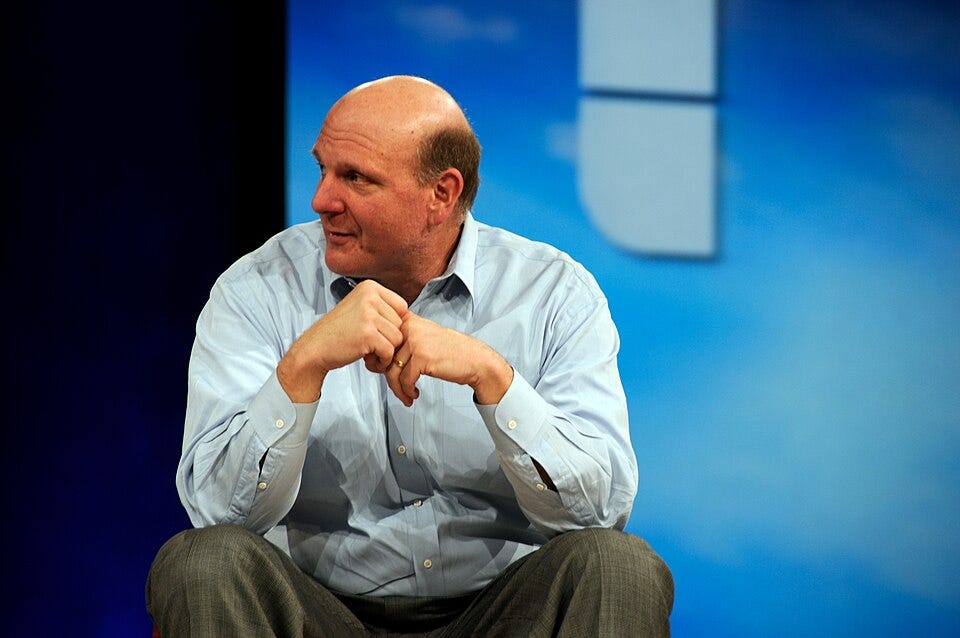
Steve Ballmer announced he would retire as CEO of Microsoft within 12 months, ending a 13-year tenure. During his reign, the company remained highly profitable but missed key shifts in mobile and search as rivals like Apple and Google surged ahead.
Aug. 24
Samsung Electronics — Apple Verdict (2012)
A California jury found Samsung infringed multiple Apple patents and copied key iPhone design features, handing Apple a blockbuster victory in one of the most important intellectual property cases in tech history. Jurors concluded Samsung devices mimicked the iPhone’s appearance and functionality as smartphones reshaped consumer electronics. The jury ordered Samsung to pay Apple $1.05 billion. Apple had wanted $2.5 billion.
Emulex — Fraud Scheme (2000)
An imposter posing as Emulex, a data-center equipment maker, issued a bogus press release claiming accounting irregularities and executive resignations. The fake news triggered a massive selloff that briefly wiped out billions in market value before the hoax was uncovered. The culprit, Mark S. Jakob, later pleaded guilty and was sentenced to prison for securities fraud.
August 25
Harry S. Truman — Regulatory Action (1950)
Harry S. Truman ordered the U.S. Army to seize control of the nation’s railroads to avert a nationwide strike that threatened to disrupt the economy during the Korean War. The extraordinary move underscored the government’s willingness to take direct control of critical industries in times of crisis.
Visa U.S.A. — Executive Resignation (1993)
H. Robert Heller abruptly resigned as president of Visa U.S.A., a surprise exit that underscored leadership turmoil at the credit card giant as it lost market share to rival Mastercard.
Donald Trump — Executive Overreach (2025)
Donald Trump attempted to remove Lisa Cook from the Federal Reserve Board, citing alleged mortgage fraud, in an unprecedented challenge to the central bank’s independence. Cook sued days later, arguing the move violated the law’s “for cause” requirement, setting off a high-stakes legal battle over presidential power that reached the Supreme Court.
Aug. 26
Burger King — Acquisition (2014)
Burger King announced it would acquire Tim Hortons in an $11 billion deal and relocate the combined company’s headquarters to Canada. The transaction was structured as a tax inversion, allowing the new parent company to benefit from Canada’s lower corporate tax rate. It drew political backlash in the U.S. but was soon forgotten.
Johnson & Johnson — Legal Judgment (2019)
An Oklahoma judge ordered Johnson & Johnson to pay $572 million for its role in fueling the state’s opioid crisis, finding the company’s marketing practices contributed to a public nuisance that claimed the lives of more than 6,000 people in the state.
Aug. 27
Ford Motor Co. — Product Failure (1957)
Ford Motor Co. introduced the Edsel, a heavily hyped new car line that quickly became one of the most infamous failures in American business history, plagued by poor design, confusing branding, and weak demand. Read More: The Biggest Business Blunders Of All Time (Blunder Lists)
Hooper Holmes — Bankruptcy (2018)
Hooper Holmes, which operated as Provant Health Solutions, filed bankruptcy after struggling with declining demand for its workplace health screening services. The collapse disrupted wellness programs used by employers nationwide, leaving workers and insurers scrambling to replace services like biometric screenings and health assessments.
Dole Food Co. — Legal Judgment (2015)
A Delaware court found directors and executives of Dole Food Company liable for $148 million in damages for manipulating the company’s stock price to benefit controlling shareholder David H. Murdock during a take-private deal, a landmark ruling on corporate governance and shareholder rights.
Aug. 28
Prudential Securities — Settlement (1996)
Prudential Securities agreed to a $600 million settlement with regulators over allegations it defrauded mutual fund investors through improper sales practices, including pushing risky limited partnerships on unsuspecting customers. The settlement marked one of the largest brokerage enforcement actions of the era.
Tim Leissner — Guilty Plea (2018)
Former Goldman Sachs banker Tim Leissner pleaded guilty in the 1MDB scandal, a global fraud that diverted billions from a Malaysian state fund through bribery and shell-company laundering. Read More: The Outrageous Acts Of Criminally Charged Corporations (Blunder Lists)
Herbalife — Settlement (2020)
Herbalife Nutrition agreed to pay more than $123 million to resolve charges under the Foreign Corrupt Practices Act, stemming from bribery and accounting violations tied to its operations in China.
Aug. 29
Waste Management — Settlement (2005)
Former executives of Waste Management agreed to pay more than $30 million to settle accounting fraud charges tied to a scheme that overstated profits by roughly $1.7 billion, one of the largest restatements of its time.
Joel Steinger — Fraud Sentencing (2014)
Joel Steinger was sentenced to 20 years in prison for orchestrating a $1 billion-plus viatical and life insurance fraud through Mutual Benefits Corp. He offered a macabre investment: betting on when people would die, selling interests in life insurance policies on AIDS patients and other serious ailments. He rigged life-expectancy projections and when patients outlived projections, he used new investor money to keep older policies afloat on Ponzi fashion.
Spirit Airlines — Bankruptcy (2025)
Spirit Airlines filed bankruptcy for the second time in less than a year, just months after emerging from a prior restructuring. The repeat filing underscored the airline’s deep financial troubles as mounting losses and a failed turnaround left it unable to stabilize its business. Read More: Calling Spirit Airlines On The Ouija Board (Business Blunders)
Aug. 30
Hewlett-Packard — Settlement (2010)
Hewlett-Packard agreed to pay $55 million to settle allegations it overcharged the U.S. government under contracts with the General Services Administration and other federal agencies, resolving claims it failed to provide required pricing discounts.
Aug. 31
Arthur Andersen – Demise (2002)
On this day in 2002, Arthur Andersen surrendered its licenses to practice public accounting, effectively ending the 89-year-old firm. Once a Big Five accounting giant, Andersen had employed 85,000 people worldwide before it was convicted of obstruction of justice for destroying Enron documents. The U.S. Supreme Court later overturned the conviction. By then, there was no Arthur Andersen left to save.