

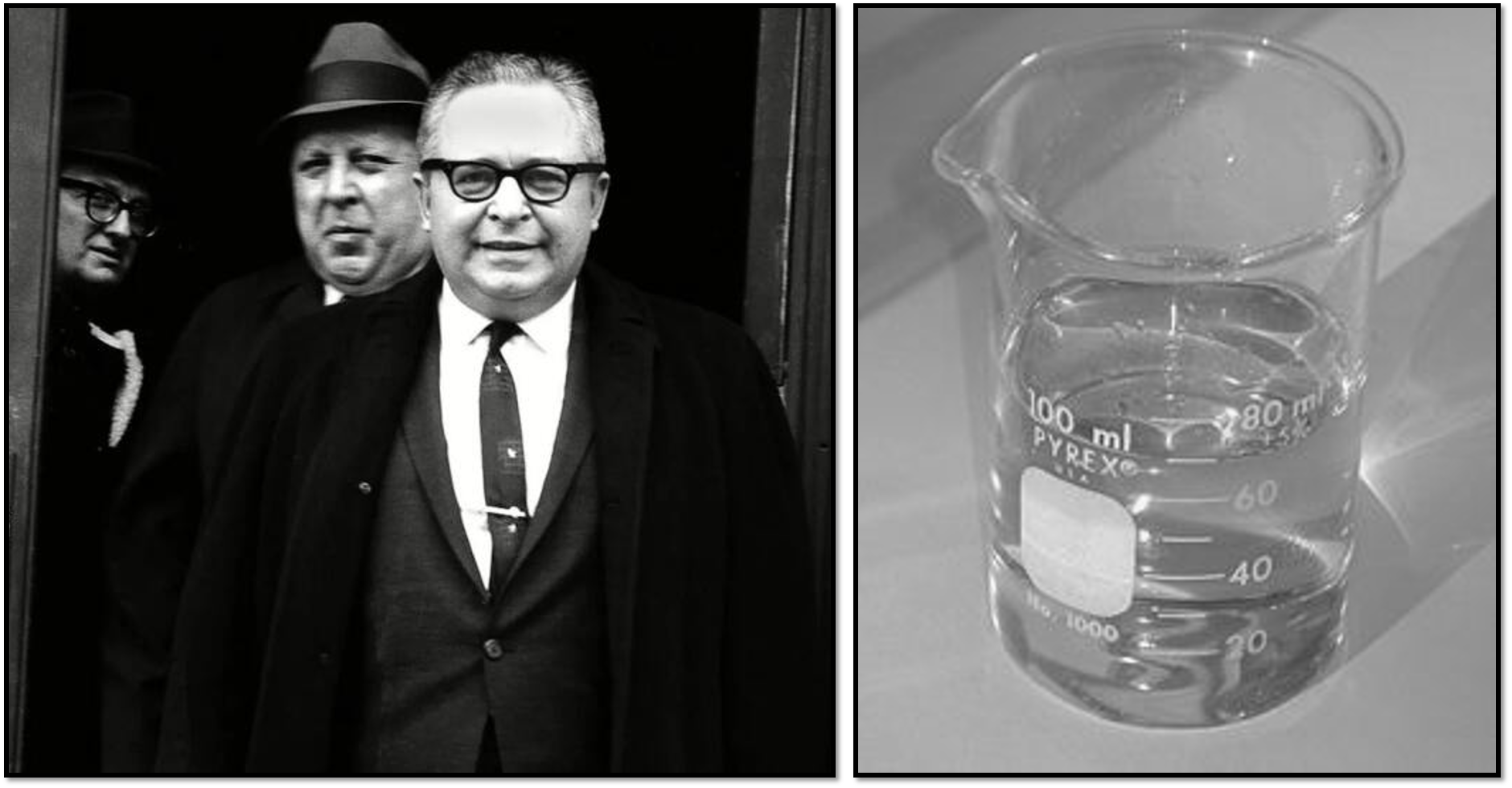
Commodities trader Anthony “Tino” De Angelis nearly toppled a pillar of American finance in 1963 with an audacious stunt that went down in history as “The Great Salad Oil Swindle.”
De Angelis ran Allied Crude Vegetable Oil Refining Corp. out of Bayonne, New Jersey. His company purportedly controlled vast quantities of soybean oil stored in tanks along a grimy waterfront.
He put up the oil as collateral for huge loans from banks and trading houses eager to finance the booming commodities trade.
There was nowhere near as much oil as he claimed.
He fooled Wall Street with simple physics: Oil floats, water sinks.
He filled massive storage tanks mostly with water, then layered a few feet of oil on top. Inspectors dipped their measuring rods and never realized that beneath the surface sat millions of gallons of H2O.
He claimed to control roughly 1.8 billion pounds of soybean oil. Investigators later found only a fraction of that amount.
He also pledged the same watered-down tanks multiple times. Lenders extended credit based on warehouse receipts and inspection certificates that were, in reality, little more than stage props.
His creditors and investors should have known better.
De Angelis had previously been involved in a scam involving the National School Lunch Act and the Adolph Gobel Co. He overcharged the government and delivered over 2 million pounds of uninspected meat. Once the debacle was discovered, he ended up filing bankruptcy.
Nevertheless, he was able to move on to the next thing. His Great Salad Oil Swindle allowed him to take out $150 million to $180 million in bogus loans, or up to as much as $2 billion in today’s dollars.
De Angelis used the money to buy as much soybean oil and as many soybean oil futures contracts as possible.
He wanted to corner the soybean market amid talk of a U.S. trade deal with Russia that would boost exports. But so much for the Russian dressing. Those talks collapsed.
When soybean prices plunged, inspectors reexamined his tanks and the illusion was gone. De Angelis’ company was forced to file bankruptcy in November 1963.
His scheme bilked more than 50 banks and trading firms, but the biggest loser was a subsidiary of American Express called American Express Field Warehousing Corp. When the fraud came to light, its stock lost half its value.
A young Warren Buffett studied the wreckage and decided the scandal had wounded Amex’s reputation less than its share price. He purchased a 5% stake in the company, a bet that became one of the early triumphs of his career. For Buffett, at least, it was like Thousand Island.
The collapse of De Angelis’ company triggered panic on the New York Stock Exchange and in commodity markets. But few remember the headlines.
That’s because the scandal broke in November 1963, just days before President John F. Kennedy was assassinated, pushing it off the front pages.
De Angelis was convicted of fraud on March 1, 1965. He spent several years in federal prison, but not long enough to cure him of ambition.
By the mid-1970s, he resurfaced in the Midwest pork business, where dealers alleged he ran a rolling payment scheme that left Indianapolis livestock sellers out roughly $7 million.
The Great Salad Oil Scandal forced lenders to reassess how they secured inventory-backed loans. It also led to tighter controls in warehouse financing and inspection procedures.
Yet reckless lending continues today with the subprime auto loans and bogus account receivable financing embarrassing major banks and their genius financiers. Other’s have committed similar frauds, like Q.T. Wiles at MiniScribe who fooled auditors by packing bricks into hard-drive boxes.
Read More: Q.T. Wiles – Miniscribe (Business Blunders Hall Of Shame)
De Angelis pulled one of the most absurd schemes in American financial history and gave us a reminder that the market isn’t always built on solid fundamentals.
Sometimes, it’s built on a thin layer of oil floating right on top of a whole lot of nothing.