Tricolor Me Blue
JPMorgan Chase, Barclays and Fifth Third Bank can't escape the obvious conclusions as they defend themselves in a subprime auto lending debacle
This Week In Blunders – April 19-25
“At best you were incompetent, at worst you were complicit. Either way, you should be fired.” – Democratic Sen. Elizabeth Warren addressing Well’s Fargo’s CEO about its fake accounts scandal in 2017.
JPMorgan Chase, Barclays and Fifth Third Bank are trying to dodge an investor lawsuit tied to the collapse of Tricolor Holdings, a once-prominent subprime auto lender and used car dealer.
Investors claim the banks helped finance and market securities backed by Tricolor’s loans while ignoring “giant red flags,” including audit findings. Its CEO Daniel Chu and other top executives have been charged with fraud.
A judge is now considering the bank’s defense: They didn’t know. They were blindsided.
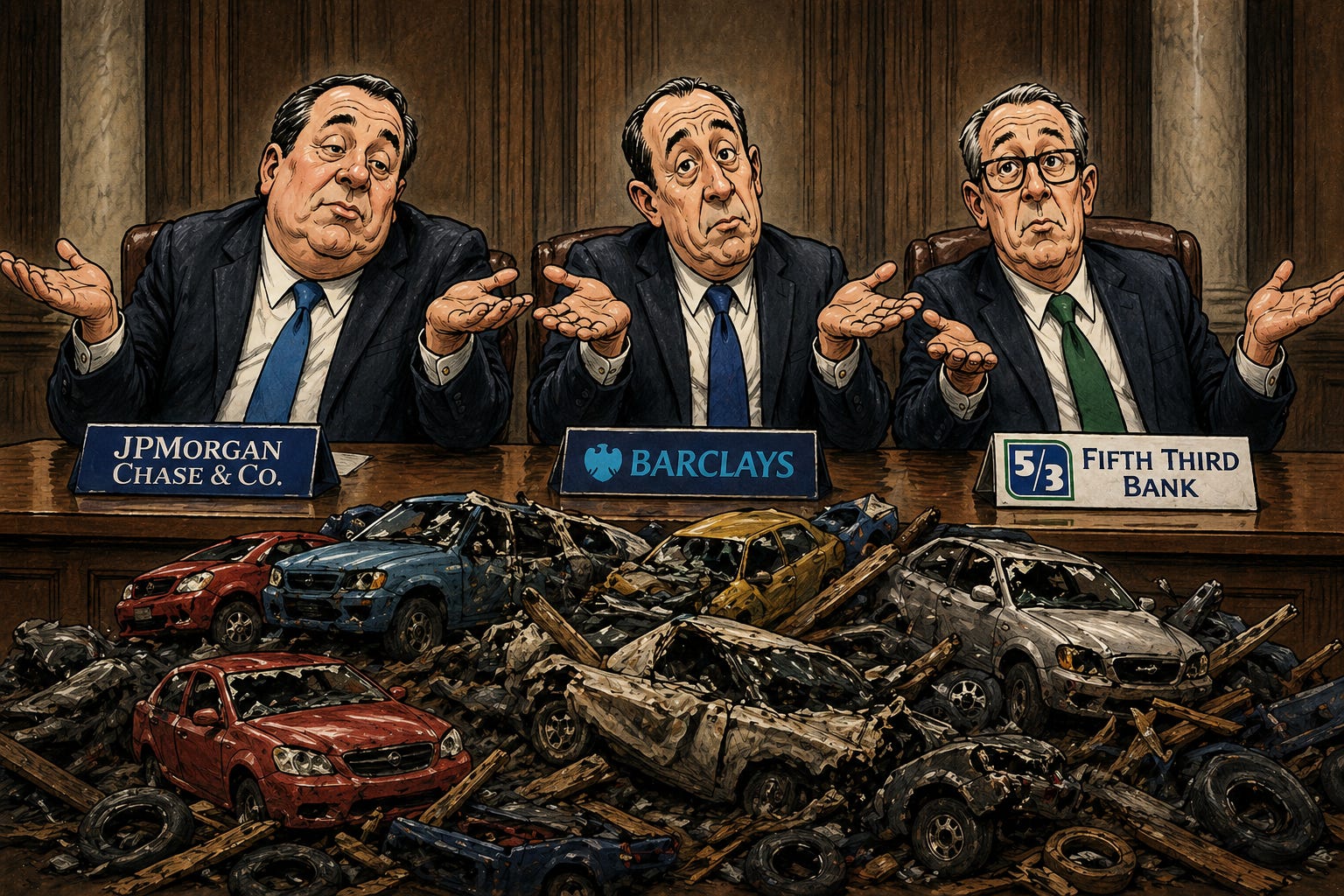
Tricolor’s recklessness should not have been difficult to miss. But bankers love anyone they can charge usurious interest rates, and such love is indeed blind.
The first red flag they missed was that this is a subprime auto lender. Since the 2008 financial collapse every banker knows about the risks involved in lending money to people who can’t really afford their cars.
Then there’s a host of other allegations, including claims that Tricolor put up the same collateral to multiple lenders and that it even collateralized loans that were already in default.
“It is not our finest moment,” said JPMorgan Chase CEO Jamie Dimon in October after the nation’s largest bank charged off $170 million in losses from Tricolor.
Court filings also cite internal warnings and conversations that raised these concerns. In one instance, Chu allegedly told one lender he was right about Tricolor’s books, but he warned that he’d look stupid reporting it because … Enron.
“Enron raises the blood pressure,” he said, according to court documents. “Who wants to be thrown in the category?”
Read More: Going All Enron On Them (Business Blunders)
So what are these banks? Incompetent or complicit? Or maybe they can have it both ways? A judge will decide.
In any case, if institutions this large can’t, or won’t, spot obvious problems in the assets they finance, why are investors paying them?

Let Spirit Airlines give up the ghost
Skyrocketing jet fuel prices have Spirit Airlines taking its last gasps after filing its second bankruptcy.
It’s not strategically important. It’s not even well-loved after pioneering the hidden-fees business model that plagues the industry today. Oh, and in decades past, it taunted the public with obscene advertisements like this:
But this week President Donald Trump proposed a $500 million bailout for this flaming yellow blunder of an airline.
Read More: Calling Spirit Airlines On the Ouija Board (Business Blunders)
It would come in the form of a low-interest loan and be backed with warrants that could give the government up to 90% ownership. And then, who knows, maybe we could flip it for a profit?
Maybe the Biden administration shouldn’t have killed its deal to merge with JetBlue. Maybe we should be worried about the loss of 14,000 jobs and a reshuffling of gate assignments. Maybe we should worry about the end of cheap fares. But all handwringing aside, this is a bad idea.
For one, it’s a violation of the free-market principles that too many conservatives pretend to champion only when it serves their arguments. When the government owns one airline, all the other airlines have to worry about the selective regulation.
For another, investing in airlines has too often proven a losing bet.
Did Trump forget the lessons he should have learned in the 1990s after running Trump Shuttle into the dirt? Turns out, it was just another overpriced platform to write “TRUMP” in bold letters.
Why do these blunders keep happening?
Don’t miss my first-ever Substack livestream, talking with veteran stock watcher Herb Greenberg about why we write the things we write.
Greenberg, known for his “Red Flag Alerts,” has a long history of calling blunders in progress. Investors would do well to take heed to his calls.


