

“I rob banks because that’s where the money is.” – Willie Sutton
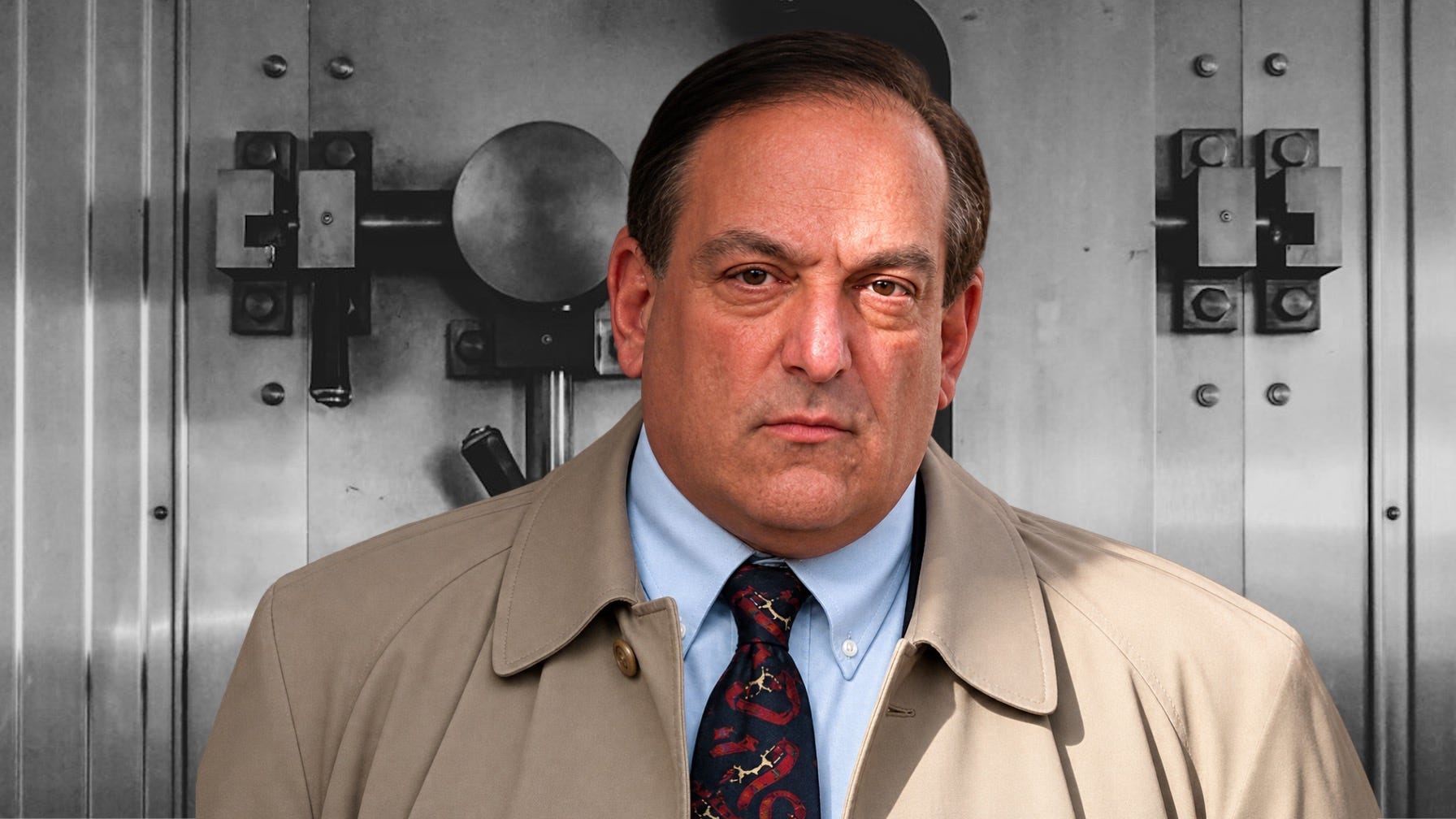
(Please Welcome Ed Mattar to The Business Blunders Hall Of Shame, a free anthology white-collar criminals, disgraced executives and corporate fraudsters who turned success into scandal, and in many cases, prison sentences. This is a sordid tale I covered decades ago about a regulatory blunder and a deadbeat banker who didn’t pay his debts or do his time.)
Ed Mattar defaulted on bank loans, stiffed health-club customers, ran a college into the ground, and left students waiting for tuition refunds.
So how did he end up owning a state-chartered bank?
In 1989, Mattar acquired a tiny institution in Boulder, Colo., and renamed it BestBank. He called it a 50th-birthday present to himself. It would eventually become an expensive present for everyone else.
Mattar was a chronic deadbeat who left a trail of tears almost everywhere he went. Here are some of his career highlights (cribbed from my 1998 investigation for The Rocky Mountain News):
1983 – Closed a health club he owned in Worcester, Mass., refusing to refund customers or pay his landlord, who claimed he owed more than $26,000 in rent.
1988 – Forced to resign as president of Central New England College in Worcester after auditors discovered financial irregularities and $14 million in debts.
1991 – Sued for $286,500, by a Massachusetts banks claiming he personally defaulted on three loans. The bank ultimately foreclosed on his 5,500-square-foot home in Worcester.
1994 – Closed a school that he owned in Maine and Rhode Island known as Career Institute. The school owed the U.S. Department of Education $251,000. Additionally, the Finance Authority of Maine complained that Mattar's Career Institute owed more than $75,000 in refunds to students who withdrew from classes.
1996 - The Education Department foreclosed on Nasson College, a school he owned in Springvale, Maine. A trust Mattar controlled never made a payment on its $400,000 loan. At the time of foreclosure, the debt had grown to $600,000 and the school owed $28,500 in back taxes.
1997 - The Education Department notified Mattar that his school in Pawtucket, R.I., called the Nasson Institute, would lose its eligibility for government student loan assistance. The department complained of a student loan default rate of 42.1 percent, nearly four times the national average. The school recently announced it is closing.
July 1998 - Banking regulators declared Mattar’s BestBank insolvent with $135 million in bad loans and only $23 million in loan loss reserves. Shortly before regulators seized the bank, Mattar paid himself and his bank president a $9 million bonus.
Bad credit? Buy a bank
Mattar’s credit report should have stopped him at the door, but who was checking?
“The question makes me squirm a little bit,” said Colorado Banking Commissioner Richard Fulkerson in 1998. “I don’t have a good answer for you. We should have been more aware of the problems.”
Fulkerson was just picking up the pieces. He wasn’t the banking commissioner at the time. A former banking commissioner, though, acknowledged that had regulators known about Mattar’s health-club debacle, he probably never would have been allowed into banking.
Mattar bought BestBank at a time when Colorado was still recovering from a banking crisis and regulators were desperate to find anyone willing to put capital into troubled institutions.
And for a while, Mattar looked like a genius.
BestBank grew from just $8 million in assets at the end of 1993 to $314 million by the time it collapsed in 1998. In 1995, American Banker even named it the best-performing U.S. bank with less than $50 million in assets.
BestBank attracted deposits by offering some of the highest CD rates in the nation. But it was all built on subprime credit cards. You know, the high-fee, exorbitant-interest-rate cards issued to consumers with bad credit.
More than half of them eventually went bad. Credit-card receivables exploded from $42 million to $240 million in less than two years.
No matter for Mattar. He and BestBank president Thomas Alan Boyd paid themselves $9 million in bonuses shortly before regulators seized the bank in July 1998.
The failure ultimately cost the Federal Deposit Insurance Corp. more than $200 million and uninsured depositors another $27 million.
The bill comes due
Somehow, federal prosecutors didn’t get around to charging Mattar until 2003.
His trial began in 2006, only to be postponed when a juror became ill. Mattar was not convicted on federal bank-fraud charges until February 2007.
Even his sentencing was delayed until Nov. 2, 2007.
By then, Boyd was serving more than seven years in prison and others convicted in connection with BestBank were also behind bars.
Hours before Mattar was supposed to finally appear in federal court for sentencing, he took a sledgehammer to the window of his 27th-floor Denver hotel room and jumped to his death.
His conviction was vacated on a hard-won technicality: Defendants who die before sentencing are cleared since they have no chance to appeal.
So besides a big pile of defaulted debt, all he left behind were shards of broken glass, some snapped tree branches, and a small crater in the landscaped patch where he landed outside a downtown Denver hotel.
Read More:

I'm a new reader of "Business Blunders". This is GREAT stuff ! ! ! I love learning about failures -- they teach us paths NOT to follow. Keep up the great journalism.