

“An American monkey, after getting drunk on brandy, would never touch it again, and thus is much wiser than most men.” – Charles Darwin
Every investment bubble needs a mascot. The Beanie Baby craze had Princess the Bear. The dot-com bubble had a sock puppet. The housing bubble had McMansions. And the NFT bubble had cartoon monkeys.
Actually, they were apes, but anyone paying millions of dollars for a digital primate has bigger problems than taxonomy.
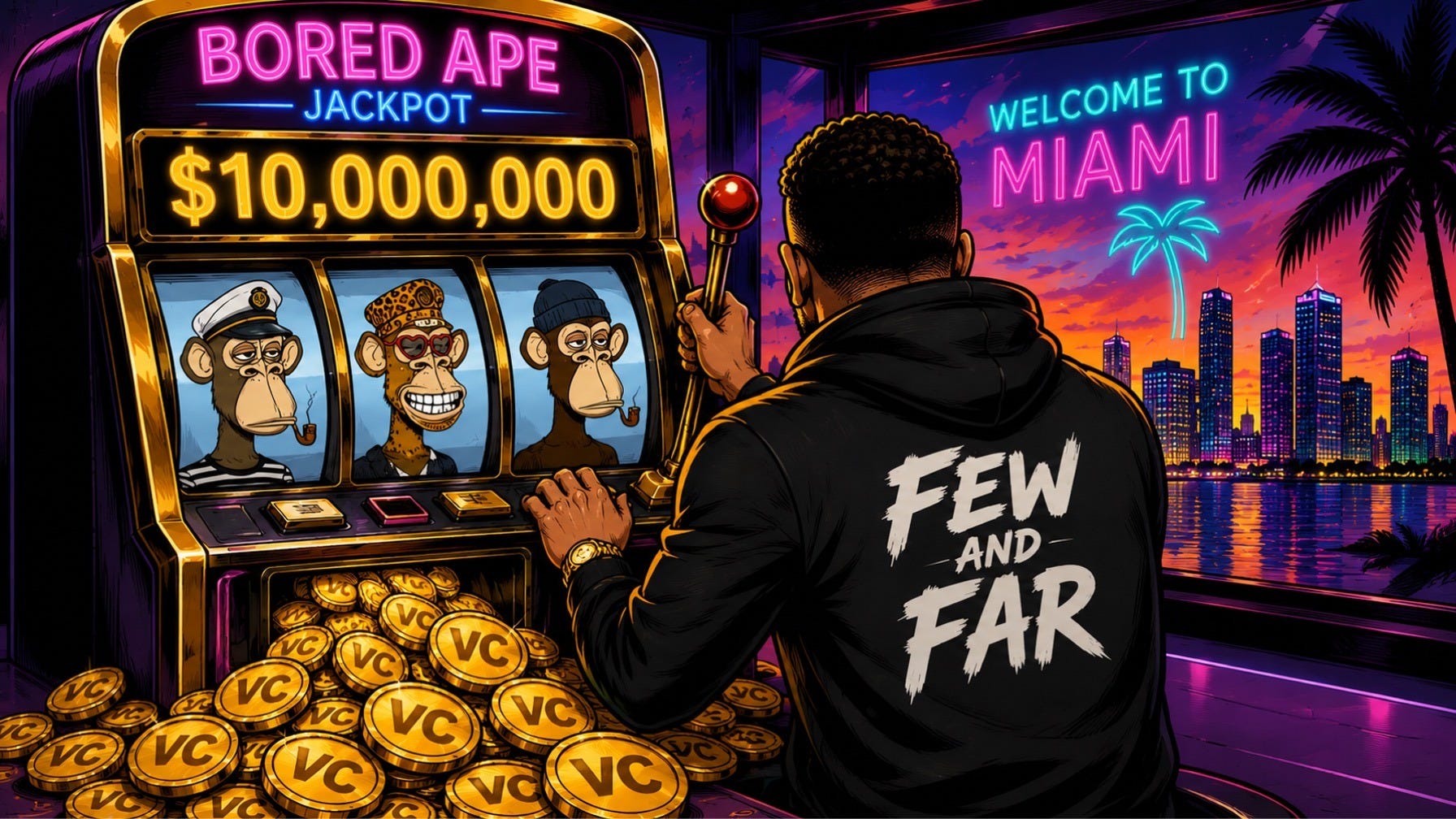
Venture capital firms that should know better put up $10.5 million to finance a Miami-based startup called Few and Far. It promised to build a marketplace for NFTs, or “non-fungible tokens.” Federal prosecutors say it instead became founder Taj Tarsha’s personal piggy bank.
Last week, they announced an indictment against Tarsha, 34, for securities and wire fraud alleging that he defrauded 67 investors. Tarsha’s attorneys have said he’s innocent and that Few and Far simply went down with the NFT market.
NFTs allow artists and celebrities to create unique digital works and sell them directly to collectors, kinda like Pokémon for adults with too much money. They leverage blockchain technology to record ownership and can allow creators to collect royalties every time the work is resold.
Leading the craze was the Bored Ape Yacht Club, a collection of 10,000 unique cartoon apes.
In 2022, Justin Bieber famously bought Bored Ape #3001 for $1.3 million. Snoop Dogg, Jimmy Fallon, Paris Hilton, Serena Williams and other celebrities also collected or promoted NFTs.
Monkey see monkey do.
Tarsha wasn't even selling NFTs when he pitched investors. What Few and Far sold were rights to receive FAR tokens once they launched. Investors ultimately paid more than $10 million for rights to 95 million of them. But who could say what those tokens would eventually be worth? And who the hell was Tarsha?
He wasn’t a household name in this fast-spreading digital mania. He described himself in a sponsored video on CoinDesk as a bitcoin investor. Somehow, though, respected venture capitalists put their names behind his startup, and raising money became much easier.
Pantera Capital led the financing, joined by several other crypto venture firms.
Then Tarsha allegedly diverted their money into online gambling, speculative cryptocurrency trading, a Miami condominium, interior design services and his DJ hobby. He also took undisclosed bonuses and compensation, even while privately acknowledging the company had “zero revenue,” according to the indictment.
Then when the NFT market tumbled, his newfound wealth became a monkey on his back.
