

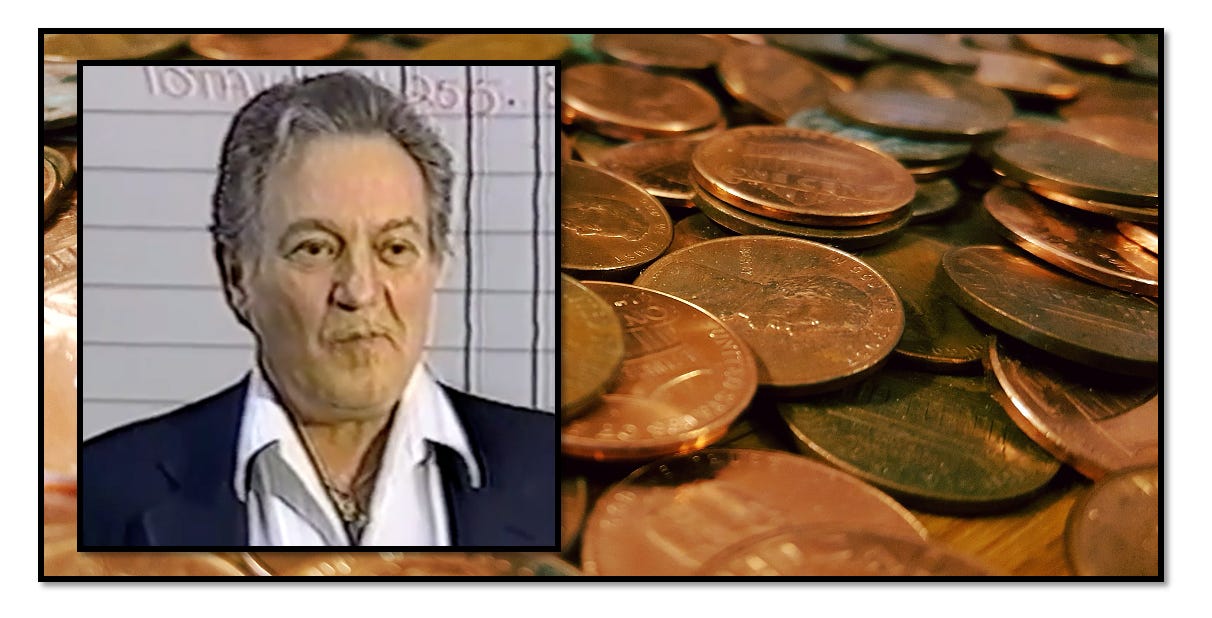
Meyer Blinder ran a stock brokerage that once ranked 10th in the nation by number of brokers. It boasted 66 offices in 37 states.
Blinder was renowned as the “penny stock king” as his Denver-based Blinder, Robinson & Co. pumped and dumped stocks. It sold public offerings in tiny companies and “blind pools” that often contained no real assets. Forbes magazine dubbed the firm,“Blind ‘em and Rob ‘em,” in 1987.
He was once Colorado’s highest-paid executive with a $9.5 million annual salary but his firm eventually filed bankruptcy. In July 1992, Blinder was convicted of racketeering, securities and wire fraud. He served 40 months in prison and was released at age 74 in 1995.
He was a colorful character until the very end. He once fell over during a deposition, clutching his heart and gasping for air.
“Make him answer the question,” a relentless prosecutor demanded, unimpressed with what he saw as theatrics from a crafty old man.
Blinder continued writhing on the floor, eventually getting medical attention. A reporter later asked Blinder if he needed a new heart.
“No,” replied, pointing to the prosecutor. “But if I did, I’d want his heart. He’s never used it.”
Regulators had been after Blinder for years but his hired guns kept the law at bay as he amassed a $100 million fortune.
He snubbed regulators and brazenly insisted his firm legitimately generated capital for small businesses and investment opportunities for average investors. It didn’t matter if most deals failed. Or that most of his investors lost money. That, claimed Blinder, was capitalism.
Buy a stock for a penny, ride it up to a dime or a quarter. The stock went up when Blinder put his cold-calling hucksters on the phone. When leads ran dry, the stock would plummet.
“A dollar is a blue-chip stock in my shop,” he once boasted in a room full of securities regulators.
Blinder grew up poor in New York City. His father’s death forced him out of high school. But he learned to hustle. He was charismatic and funny, grandfatherly one minute and bloodthirsty the next. After a jury convicted him, he lunged across the courtroom at federal prosecutor Howard Zlotnick.
“Zlotnick! I’ll kill him,” he cried.
Blinder’s former compliance officer testified that he had heard Blinder threaten to kill his opponents “500 times,” though few took the old man seriously.
Blinder emerged from prison in 1995, tossing his cane and shouting, “I’m free. I’m free,” on the jailhouse steps.
In 1997, he produced a video called, “The Fight to Expose,” which he distributed to the media and members of Congress. It was 60 minutes of denial and misery about his treatment in prison. He claimed there was a government conspiracy to shut him down.
“I didn’t do anything that Merrill Lynch doesn’t do,” Blinder once said in an interview. “I just did it on a smaller scale.”
It sounded delusional. Then in December 2002, Merrill Lynch and most other major U.S. investment houses paid $1.4 billion to settle civil fraud charges. Well-educated Wall Street analysts had been hyping stocks, too, with myriad layers of added sophistication, but their moves still resembled the old pump-and-dump schemes that Blinder had championed.
By 2002, though, Blinder was fading away in a nursing home in Arizona. There was no time left for, I-told-you-sos. He died at age 82.