

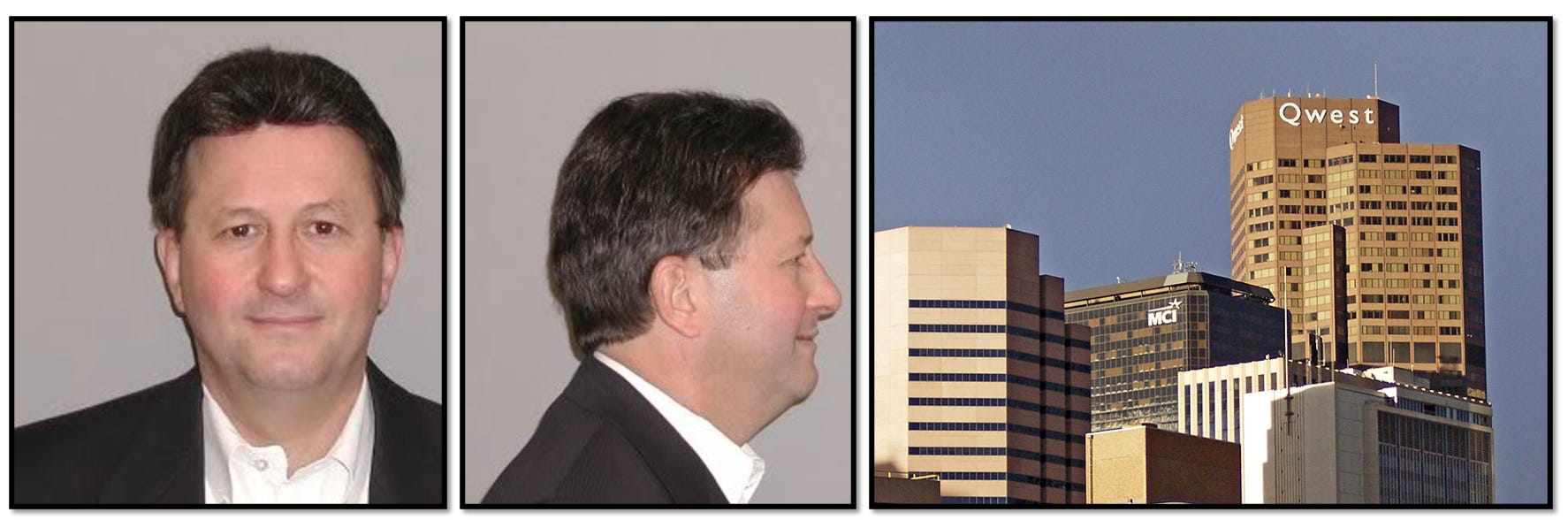
Joe Nacchio was a former AT&T executive who lorded over an Enron-style accounting fraud at Denver-based Qwest from 1997 to 2002.
The upstart telecommunication company acquired legacy carrier U.S. West in 2000, leveraging the inflated value of its stock, but its fortunes turned sharply after the deal closed. Qwest barely avoided bankruptcy, wiping out the life savings and retirement accounts of thousands of employees.
The company paid $250 million to settle accounting fraud charges with the Securities and Exchange Commission in 2004. Investigations showed managers fudged their numbers under pressure from the top. Shareholder lawsuits mounted. Several executives were sanctioned or prosecuted.
Nacchio, however, was not pursued criminally for the accounting fraud that had decimated his company. Instead, he was convicted on insider trading charges and served his prison sentence from 2009 to 2013.
Nacchio has always maintained his innocence. He says his prosecution was retaliation from the federal government after he refused to turn over data to the National Security Administration, standing up for the privacy rights of Qwest customers.
Nacchio was combative with everyone from his underlings to the media. Even as Qwest stock plunged, he publicly took on Wall Street analysts who questioned the company’s aggressive accounting practices and financial forecasts that far exceeded an industry in steep decline.
His bluster, however, was never enough to overcome reality.
“You all think we cheat and lie and steal,” he said at a Goldman Sachs conference on Oct. 3, 2001. “And therefore you trade us at a discount to what a normal company with great revenue and great growth should be traded. And I’m not going to convince you on that. We’ll just let the numbers speak for themselves on Oct. 31.”
Then on Oct. 31, 2001 he said this:
“Some of you will recall that at a recent conference I said the results will speak for themselves. The reality is, they do not speak clearly for themselves without some interpretation given the current economic conditions and the effects of merger and other one-time charges.”