

Charles Ponzi gets all the credit but his simple scheme of promising big returns and paying older investors with new investor funds goes back long before his time.
In the 1800s, a man who called himself the “Young Napoleon of Finance” somehow convinced America’s elite he was out to conquer the world.
Ferdinand Ward promised wealthy clients 10% monthly returns through exclusive government contracts and brilliant stock trades.
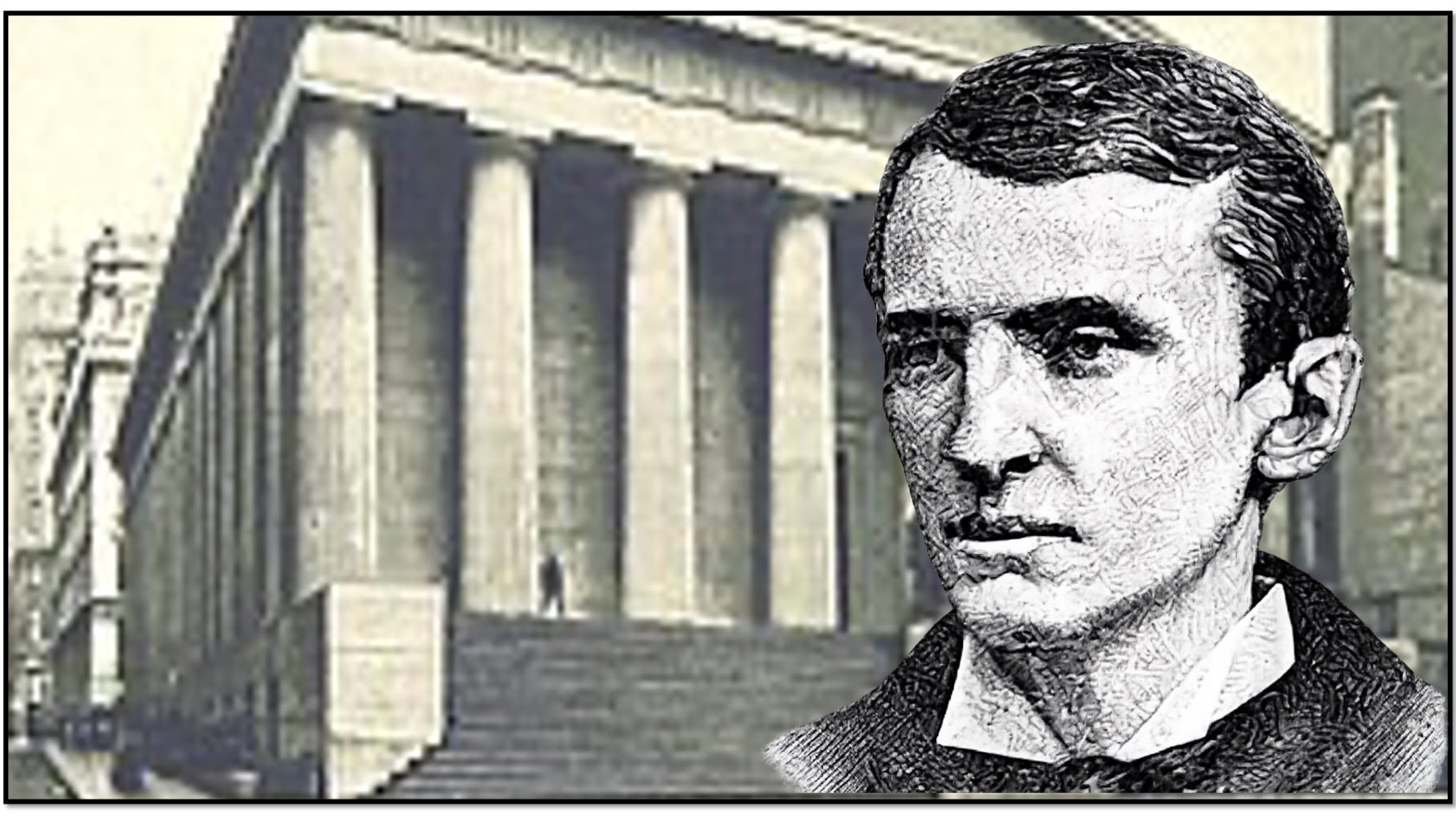
Almost none of it existed, but he had perhaps the greatest recruiting tool any scammer could ever have: former President Ulysses S. Grant.
Ward persuaded Grant’s son, Ulysses S. Grant Jr., to become a partner. Then he convinced his father, the great Civil War hero, to join the firm as well.
In addition to investing his own money, the elder Grant borrowed $150,000 from railroad magnate William H. Vanderbilt to invest after Ward claimed a lucrative government contract that required immediate financing.
There was no contract. Within days, Grant & Ward collapsed in May 1884, wiping out thousands of investors.
Grant lost virtually everything, including his faith in humanity. “I have made it a rule of life to trust a man long after other people gave up on him,” he told the firm’s bookkeeper. “I don’t see how I can trust any human being ever again.”
He spent the final year of his life, while dying of throat cancer, racing to finish his memoirs so his family would have something to live on.
At least, those memoirs eventually became one of history’s greatest publishing successes.
The collapse also ruined other notables, including Thomas Nast, an editorial cartoonist considered to be the “Father of the American Cartoon.”
It also helped trigger the Panic of 1884, one of several financial crises that periodically rattled Wall Street before the creation of the Federal Reserve.
A New York jury convicted Ward of grand larceny in 1885 and sentenced him to 10 years in Sing Sing Prison.
Ward, who had been born to parents who’d served as missionaries in India, showed no remorse. He explained in a Supreme Court hearing that he had to “rob Peter to pay Paul.”
He served about six and a half years before being released.
He’d made his mark in history, pioneering and perfecting a fraud that persist to this day. Too bad Charles Ponzi got the naming rights.