

Eliyahu Weinstein earned his place in the Business Blunders Hall of Shame as perhaps the single most defective product of President Donald Trump’s pardon industry.
The New Jersey Ponzi perp was serving a 24-year federal prison sentence for two separate frauds when Trump commuted his sentence in January 2021.
Once sprung, he did it again.
Weinstein had already cheated investors out of about $230 million, much of it by fleecing members of his own Orthodox Jewish community. He’d served less than eight years when Trump gave him another chance.
But a zebra never changes its stripes and a Ponzi never changes his plots.
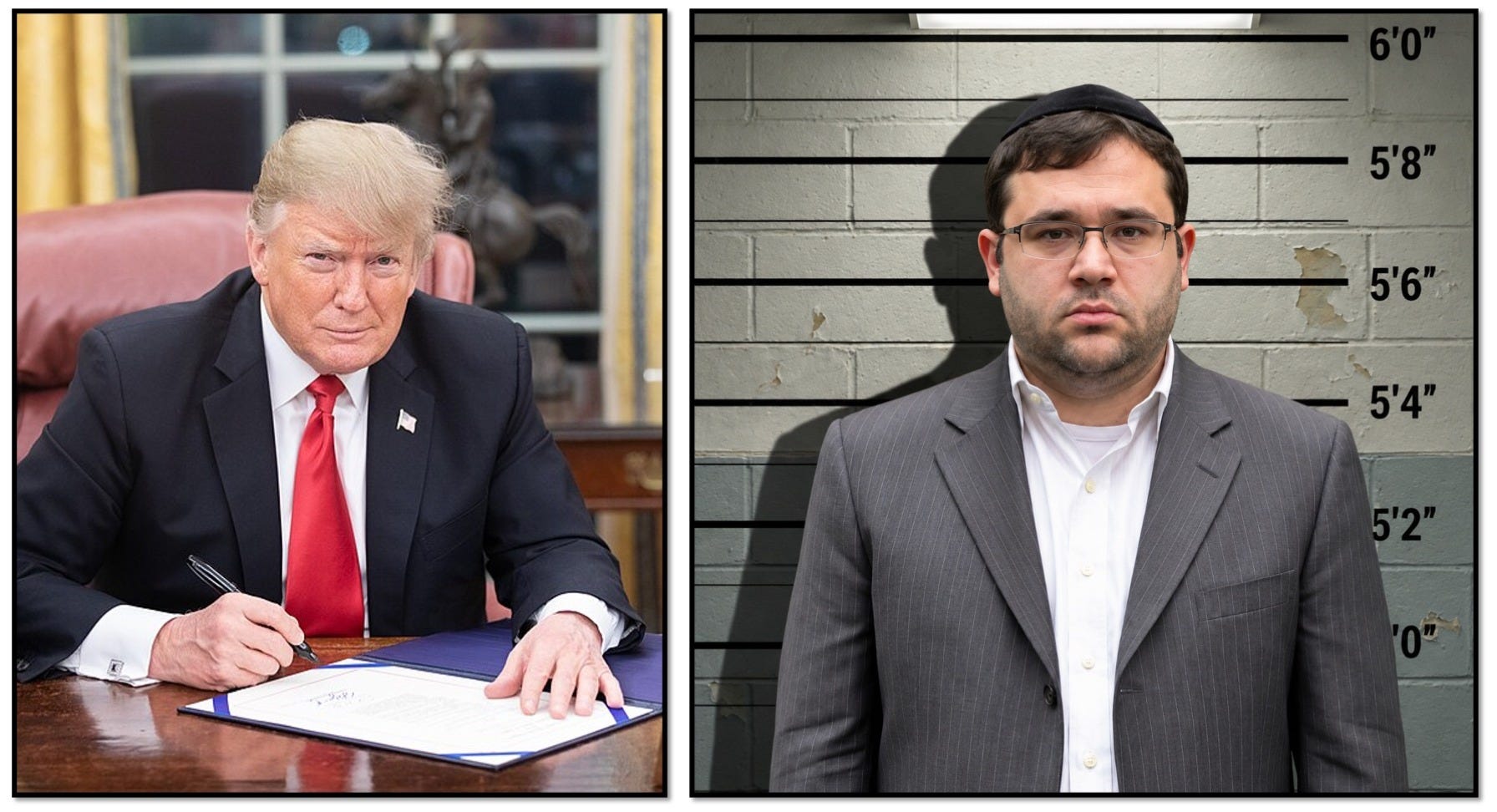
New name, same game
Weinstein started calling himself Mike Konig and cooked up a new story about COVID-19 medical supplies, scarce baby formula and first-aid kits supposedly destined for war-torn Ukraine.
Nothing like human misery can bring out the opportunist for some people. Weinstein’s new criminal enterprise took in more than $88 million, leaving investors with losses exceeding $44 million.
On Nov. 14, 2025, a federal judge sentenced him to 37 years in prison and ordered him to pay $44.3 million in restitution.
He had a presidential get-out-of-jail-free card but he could not help but roll the dice and land on another bad square.
Bagging your pardon
Trump has granted clemency to scores of fraudsters, crooked executives, financial swindlers and other well-connected offenders with the ability to pay for what the New York Times calls the “pardon industry.”
It’s a vast network of lawyers, lobbyists and political insiders who offer wealthy criminals something that can be more valuable than a good defense attorney: access to the president.
In a recent investigation and podcast, Times reporter Kenneth P. Vogel described how the presidential clemency process has become a lucrative business for people with the right connections.
Lobbying firms disclosed nearly $5.2 million in payments from clients seeking Trump clemency in 2025, roughly eight times the amount disclosed for clemency lobbying during Joe Biden’s final year in office. And that’s only the spending that made it into public lobbying reports.
CBS News reported in June 2026 that a lobbying firm run by former Trump campaign and administration officials had already collected $500,000 from a client for work involving immigration and pardon-related discussions.
In August 2026, the House Judiciary Committee, released a blistering staff report titled, “Pardons, Inc.: How Trump and His Clemency-for-Cash Racket Let White-Collar Criminals and International Drug Dealers Walk Free and Dodge Billions in Restitution Owed to Their Victims,”
Said ranking member Jamie Raskin, D-Md.:
“‘Pardons, Inc.’ has a simple business model: wealthy white-collar criminals and drug traffickers hire Trump insiders, pour money into his political operation or cultivate his family’s financial interests, and suddenly the doors of the White House swing open for a pardon, commutation, and forgiveness of all fines and financial restitution owed.”
Weinstein’s case was one of four featured in the report. It’s especially revealing because of the impressive roster of influential people lobbying for his freedom.
Among those who advocated for clemency were Harvard law professor Alan Dershowitz, former U.S. Attorney Brett Tolman, former Rep. Bob Barr and prominent Orthodox Jewish religious leaders.
Read More: Pardon My Ponzi (Business Blunders)
Some of his support came from the very community whose trust he violated.
“If he’s found guilty again, he will receive no mercy,” wrote the late Haredi rabbi Chaim Kanievsky in lobbying for Weinstein’s release.
It was in some respects a prophetic insight. Yet Weinstein continues seeking mercy through an appeal.
Preying in on the faithful
Weinstein built his first fraudulent empire in Lakewood, N.J., home to a large Orthodox Jewish community.
He portrayed himself as a successful real-estate investor and his investors handed over millions, betting on his business acumen and his standing in the community.
Federal prosecutors said Weinstein fabricated transactions, misrepresented the use of investors’ money and used funds from new investors to satisfy obligations to earlier ones, like all Ponzi schemers do.
Part of his shtick was cultivating a reputation for generosity through religious and charitable contributions, an easy performance with other people’s money.
Weinstein was arrested at his home in 2010 after the scheme collapsed. As he awaited trial, he launched a new fraud involving supposed investments in Facebook shares before the company’s initial public offering and a Florida apartment complex.
He was sentenced to 22 years in prison in 2014.
On Jan. 19, 2021, Trump commuted his sentence to time served with this announcement:
“Mr. Weinstein is the father of seven children and a loving husband. He is currently serving his eighth year of a 24-year sentence for a real estate investment fraud and has maintained an exemplary prison history. Upon his release, he will have strong support from his community and members of his faith.”
He was released the following day, with his convictions and restitution obligations still intact.
He had eight years behind bars, enough time to plan his next Ponzi.
King Ponzi
Anyone with that record and digital footprint would have a difficult time raising money.
Weinstein simply used another name, “Konig,” a German and Ashkenazic Jewish surname that means “king.” First name: Mike.
He opperated through Optimus Investments, where he stayed behind the scenes as his associates pitched investors on deals involving COVID-19 masks, test kits, baby formula and humanitarian supplies.
In a moment of global fear and widespread hospitalizations and death, these were products people desperately needed.
But King Ponzi moved investors’ money through a network of companies and associates and recruited newer investors to pay earlier ones.
In a secretly recorded conversation, Weinstein supplied investigators with a remarkably candid admission:
“I finagled, and Ponzied, and lied to people to cover us,” he said.
In addition to the money they stole, federal prosecutors said Weinstein and his associates fraudulently concealed assets that should have been available to repay victims of Weinstein’s earlier crimes and lied about his financial activities while he was on supervised release.
In March 2025, a federal jury convicted Weinstein and co-defendant Aryeh Bromberg of securities fraud, wire fraud, money laundering, obstruction of justice and related offenses.
Five of their conspirators, Christopher Anderson, Richard Curry, Shlomo Erez, Alaa Hattab, and Joel Wittels pleaded guilty.
Eight months later, Weinstein received his new 37-year prison sentence. Bromberg got 12 years. The federal judge also ordered them to pay more than $44 million in restitution for this latest roll of the Ponzi dice.
A repeat offender with repeat victims
Weinstein’s first two frauds left investors with roughly $230 million in losses. His third added more than $44 million.
Trump’s commutation didn’t erase Weinstein’s restitution obligations. But federal prosecutors said he subsequently concealed assets that should have been available to repay victims of his earlier frauds.
Weinstein didn’t get as big a break as other white-collar felons who’ve managed to ditch restitution following their clemency grants.
The August 2026 House Judiciary Committee Democratic staff report accused the administration of allowing clemency recipients to escape nearly $1.7 billion in obligations to victims and taxpayers.
The Securities and Exchange Commission, for instance, dropped civil cases against three Trump clemency recipients, according to a September 2025 report in the New York Times.
Claims against Nikola CEO Trevor Milton, Ozy Media founder Carlos Watson and investment advisor Devon Archer could have produced hundreds of millions of dollars in penalties or recoveries, the report concluded.
The pardon industry’s business model is lucrative for those selling access, and liberating for anyone buying it. Victims are people to victimize yet again by the abuse of this process.
And Weinstein ran through the full cycle: Ponzi. pardon, repeat.