

“There’s no such thing as business ethics. There’s only ethics.” – John C. Maxwell
Here’s one of the first lines you read when you visit the CFA Institute’s website:
“Join more than 200,000 chartered financial analysts, globally recognized for their commitment to ethics and professionalism, when you complete the three CFA Program exams.”
Ethics and professionalism? Last month, the CFA Institute’s former chief marketing officer Michael Collins, 61, was sentenced to three-to-nine years in prison after pleading guilty to stealing nearly $6 million.
His feat was simple, yet it was mind boggling that it wasn’t caught sooner. He ripped off the CFA Institute by submitting 144 fake invoices between 2016 and 2024.
One hundred and forty-four fake invoices? And this is the organization that teaches analysts how to dissect financial statements?
Where, oh where, were the financial controls?
“In the years preceding and since the incident, we have significantly strengthened our internal controls to protect our organization against potential future misconduct,” the group said in a statement to Wealth Management.
How reassuring. Makes me want to sign up for the CFA exams so I, too, can learn the secrets of proper financial oversight.
In a statement that prosecutors read to the court, the group said:
“Our dues-paying members’ use of the CFA designation is a point of pride for them and signals their professional status to employers, peers, and clients. Therefore, the impact of Mr. Collins’ actions goes far beyond the damage to our organization; it has repercussions for the individual reputations of our 200,000-plus members. These members are justifiably upset by Mr. Collins’ theft, and we have much work to do to repair that damage and regain their trust.”
Business ethics isn't something you master on an exam. It's something you practice every day and enforce when someone doesn't.
At the U.S. Air Force Academy in Colorado Springs, the cadet honor code is emblazoned across a building front: “We will not lie, steal, or cheat, nor tolerate among us anyone who does.”
Ethics are just this simple. But people who count money make them complicated.
Take the case of Harvard Business School professor Francesca Gino. Last year, she became the first Harvard professor stripped of tenure in 80 years following allegations of “fraudulent data” in her research.
She was globally renowned for her research into dishonesty, and got fired for alleged dishonesty.
Read More: If You Like Data Colada … (Business Blunders)
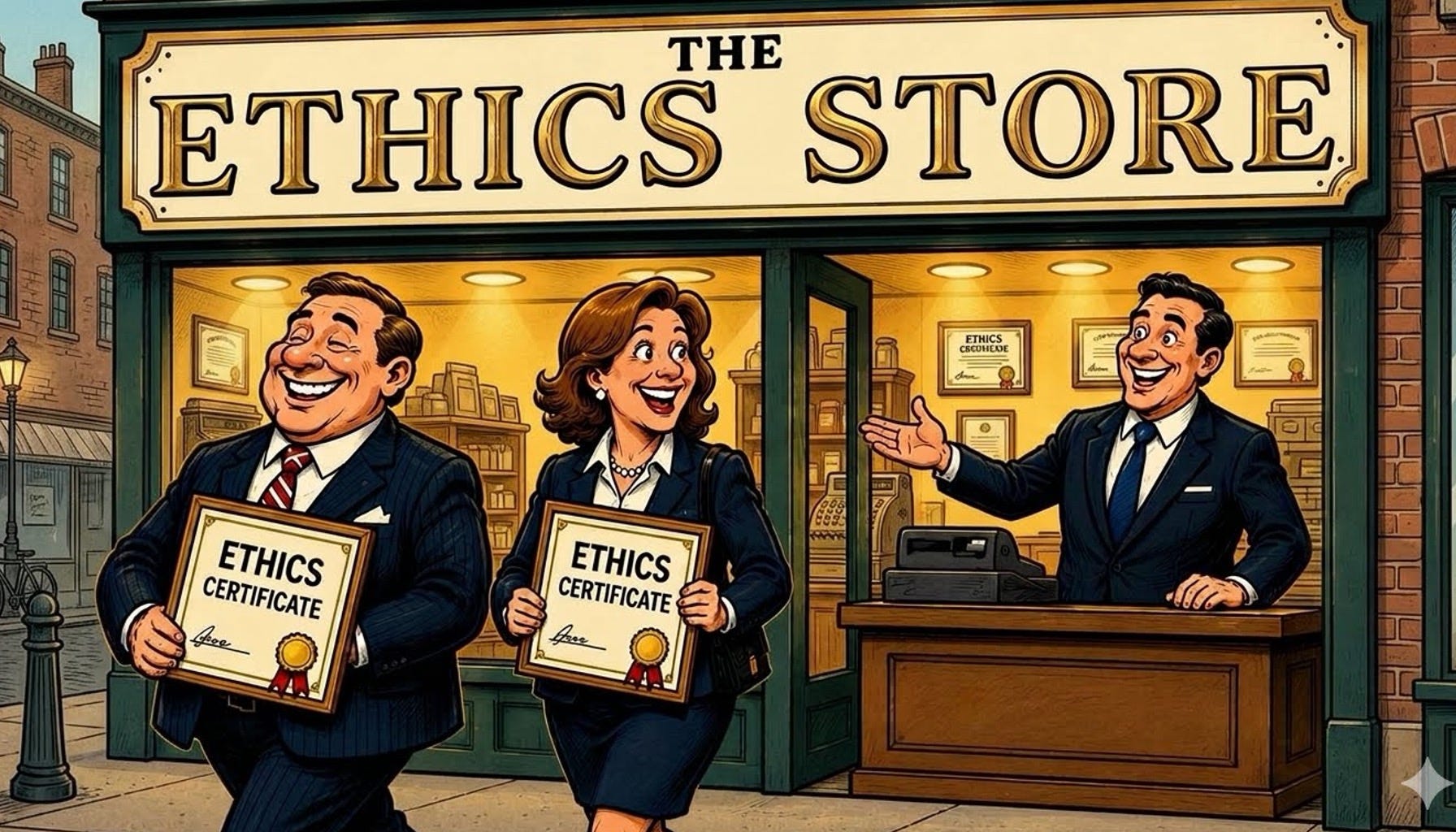
Then there’s Ethisphere, the for-profit company behind the annual “World’s Most Ethical Companies” list. Companies pay to apply for a ranking, and winners can pay again to license the award logo for their advertising and investor materials.
Unsurprisingly, some companies that made its lists have also made headlines for shady practices and public scandals. But if you don’t have business ethics you can license them from Ethisphere.
Welcome to the business-ethics-industrial complex.
The business world doesn’t need more ethicists or chartered financial analysts. It needs guardrails. It needs checks and balances. It needs people in charge who will not look the other way. People who refuse to lie, cheat and steal or tolerate anyone who does.
But there’s no certification program for that.
